
The Jesuits: Doing God's Work with Other People's Money
I. The Soldier and the Illuminated Ones
In 1521, a Basque soldier named Iñigo Lopez de Loyola had his right leg shattered by a cannonball at the Battle of Pamplona. During his convalescence, deprived of the chivalric literature he preferred, he read the lives of the saints. Something shifted. The soldier did not disappear. He was reorganised.
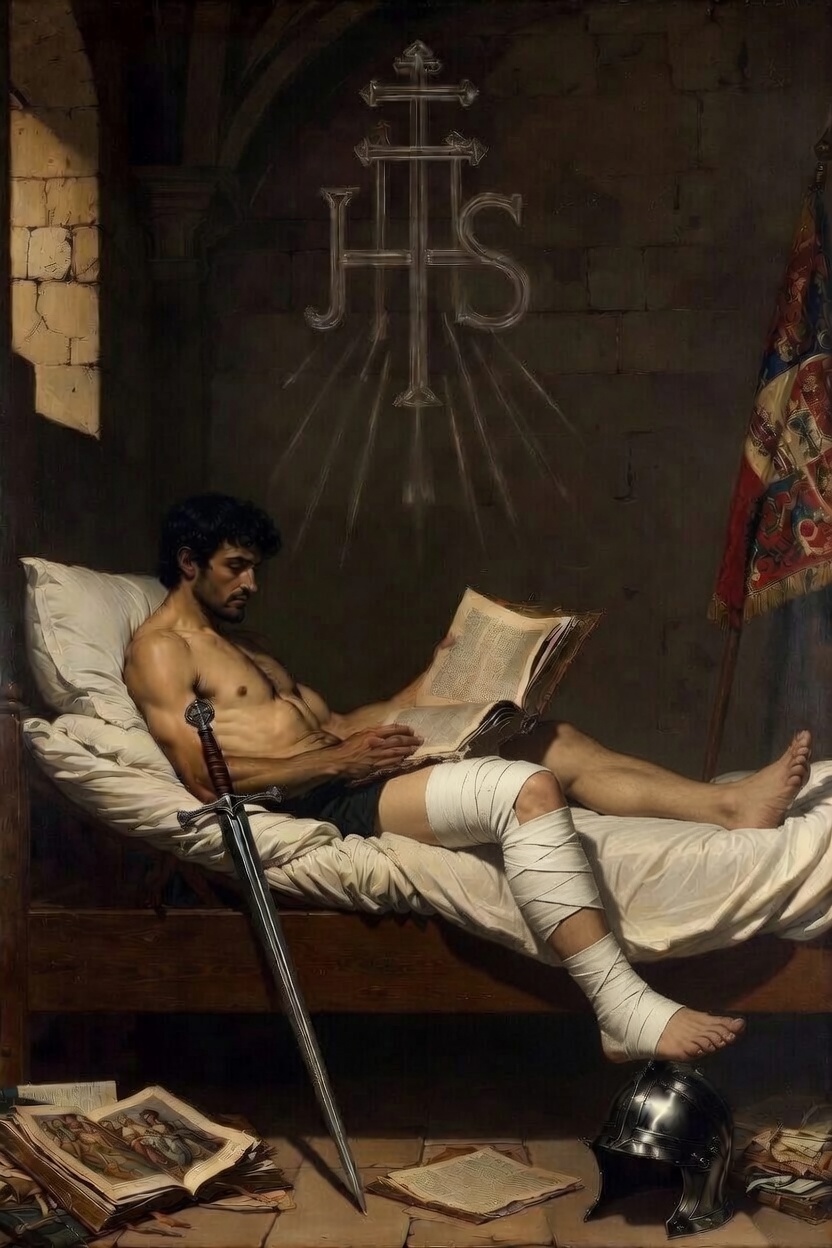
What emerged from that sickbed was one of the most consequential institutional architects in Western history. But before Ignatius of Loyola became the founder of the Society of Jesus, he passed through a world that the Spanish Inquisition found deeply troubling. The world of the Alumbrados.
The Alumbrados, the Illuminated Ones, were practitioners of a mystical Christianity circulating through the Crown of Castile in the 15th and 16th centuries. Their central claim was radical: that the human soul could reach such a degree of perfection that it could directly contemplate the essence of God. From that point, all external worship became superfluous. The sacraments became unnecessary. Sin became impossible. The Church, in other words, became structurally redundant. That was the heresy. Not devil worship. Not paganism. The elimination of the institutional intermediary.
Loyola arrived in Alcalá in 1526 and immediately fell into this circle. He chose as his confessor a Portuguese priest, Manuel de Miona, who was later pursued by the Inquisition on charges of alumbradismo. He gathered around him a group seeking spiritual guidance, predominantly women, who were themselves under suspicion. In 1527, studying at Salamanca, he was brought before an ecclesiastical commission on a charge of sympathy with the Alumbrados. He escaped with an admonition.
He always protested that he was not an Alumbrado. The scholarly consensus, on balance, accepts this. But it also accepts that he moved fluently through that world, shared its reformist atmosphere, and carried something of its interior methodology into what became the Spiritual Exercises. Two Dominican critics of the early Jesuit order, Melchor Cano and Tomas de Pedroche, were explicit: they found the Exercises structurally parallel to illuminist theology. They were not entirely wrong. They were simply unable to prove it.
What Loyola built from this material was not a mystical sect. It was a military organisation. Hierarchical, compartmentalised, globally mobile, sworn to a fourth vow of obedience directly to the Pope that bypassed every other ecclesiastical authority. The illuminist interior method, the direct communication between soul and God, was retained but disciplined, channelled, and placed in service of institutional power rather than individual transcendence. The soldier had reorganised the mystic.
II. The Suppression, Bavaria, and the Underground River
For two centuries the Society of Jesus operated as the most effective transnational intelligence and educational network the world had seen. Jesuit colleges anchored in Munich, which they called the Rome of Germany. Jesuit confessors in the courts of every Catholic monarch in Europe. Jesuit missionaries in Japan, China, India, Paraguay, and the new territories of the Americas. The fourth vow gave them a direct line to Rome that no national church could intercept.
This made them intolerable to the Bourbon monarchies. Portugal moved first in 1759. France followed in 1764. Spain expelled them from all its territories in 1767. The pressure on Rome became existential: suppress the Jesuits or lose the Catholic monarchies to schism. In 1773, Pope Clement XIV signed the brief Dominus ac Redemptor. The Society of Jesus was dissolved.
Except that it was not. The suppression could not reach into Protestant Prussia, where Frederick the Great refused to implement it, or into Orthodox Russia, where Catherine the Great actively protected the order and permitted the founding of a new novitiate. The Jesuits continued underground operations across China, Russia, Prussia, and the early United States. Their institutional memory survived intact for forty-one years until Pius VII restored them in 1814.
Now consider the geography. The Jesuit College of Ingolstadt, headquarters of the Jesuits in Germany and the engine of the Counter-Reformation in the German lands, was closed by the suppression of 1773. Three years later, in 1776, Adam Weishaupt founded his Order of the Illuminati at the University of Ingolstadt. Same city. Same intellectual environment. Same organisational DNA: cells, hierarchy, blind obedience upward, compartmentalisation, global ambition.
Weishaupt was Jesuit-educated. He modelled his order explicitly on Jesuit methods. Whether he was a continuation, a reaction, a rival, or a vehicle for residual Jesuit networks operating through a new institutional shell is a question that cannot be cleanly resolved. The documentary record was designed to prevent resolution. What can be said is this: the suppression of the Jesuits in Bavaria and the emergence of the Bavarian Illuminati in the same location three years later is not a coincidence that the historical record has fully explained.
The Jesuits returned in 1814 into a world reshaped by the French Revolution and Napoleon. The monarchies that had destroyed them were themselves in ruins or transformation. The Society re-emerged into the age of republicanism with its institutional memory intact and its methods undimmed. They had survived underground. They had always known how.
III. The Black Pope and the White Throne
The Superior General of the Society of Jesus has carried the informal title of the Black Pope since the 17th century. The name is simple in origin: the Jesuit cassock is black, the papal vestments are white. Two figures of equivalent authority, one visible, one not. The Superior General, like the Pope, is elected for life. His organisation is the largest male religious order in the world.
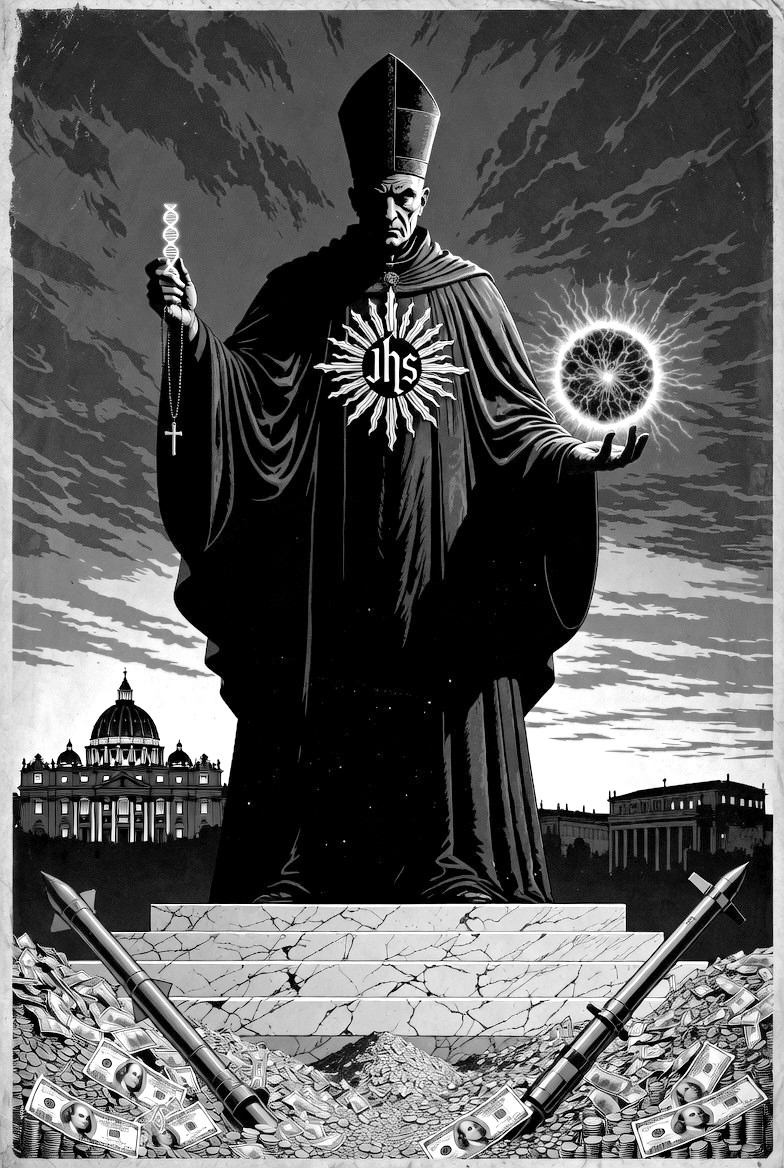
The tension between the two offices has been structural since the beginning. The fourth vow of obedience to the Pope was designed to make the Jesuits the papacy's most loyal instrument. In practice it created an organisation with its own global network, its own intelligence capacity, its own educational empire, and its own institutional agenda that could operate alongside papal authority without ever being fully subordinate to it. The Bourbon monarchies understood this. That is why they demanded the suppression.
The Jesuit ascent within the Vatican accelerated through the 20th century. By the time of the 2013 conclave, the Society's penetration of Vatican administration, theology faculties, and curial appointments was such that something previously considered structurally impossible became reality: a Jesuit was elected Pope. Jorge Mario Bergoglio, Pope Francis. For the first time in history, the White Pope and the Black Pope were the same man. The shadow and the throne had merged.
What this means institutionally is not conspiracy. It is simpler and more interesting than conspiracy. It is the completion of a 500-year institutional trajectory. The soldier-mystic from Azpeitia (Gipuzkoa) who was charged with sympathy for the Illuminated Ones, who built a military-spiritual organisation from that charge, whose order was suppressed and went underground and returned, whose successors penetrated every court and university and intelligence apparatus in the Western world, had finally arrived at the chair of Peter.
The Black Pope had become the White Pope. And the hill on which they both sat enthroned was the Vatican.
IV. Vatika: The Name That Was Already There
The word Vatican is not Latin. It is not Greek. It cannot be traced to the Bible. It predates Christianity by centuries and its roots go deeper still. Before Rome was Rome, the Etruscan civilisation built its dead cities on hillsides outside their walls. The Etruscans did not bury their dead within the living city. On the west bank of the Tiber, on a low hill that the Romans considered somber and ominous, situated outside the original city walls and far from the seven hills of the classical city, the Etruscans had established a vast necropolis. A city of the dead. And they named it for its guardian.
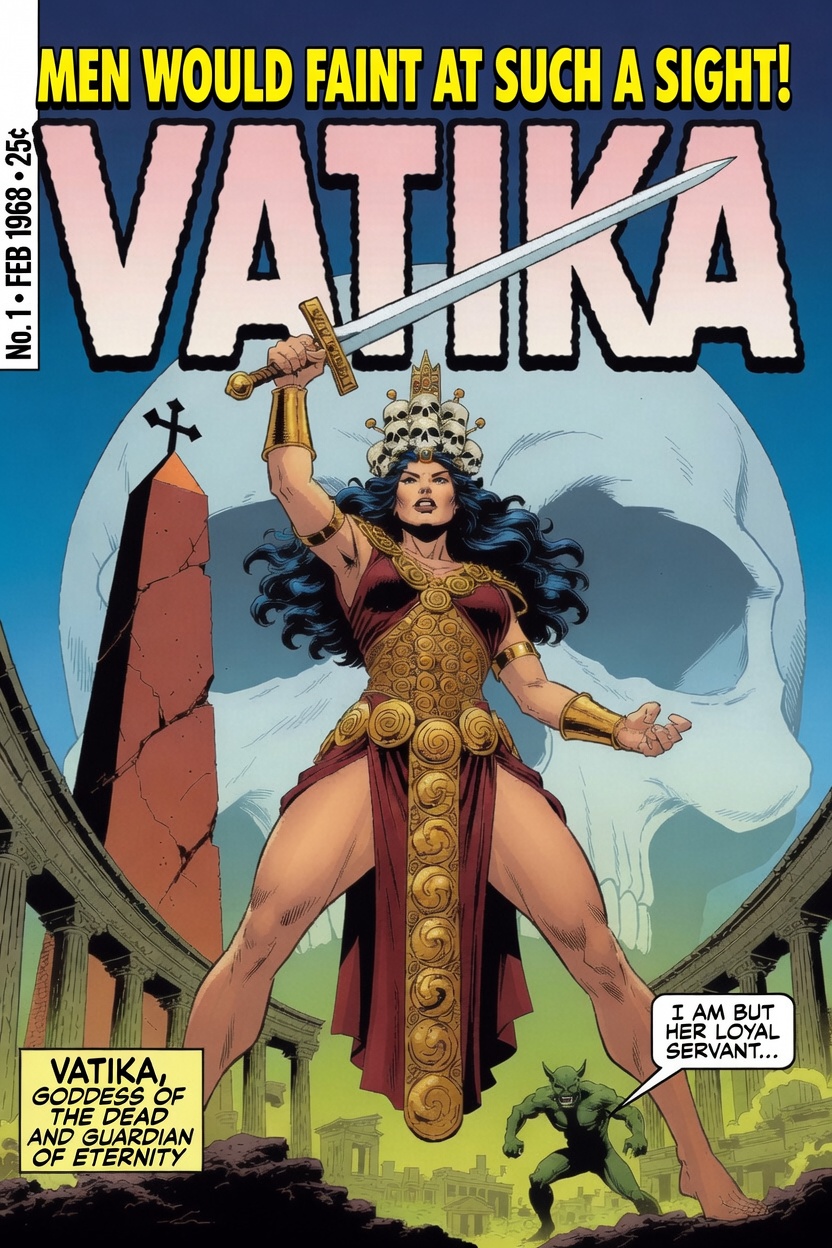
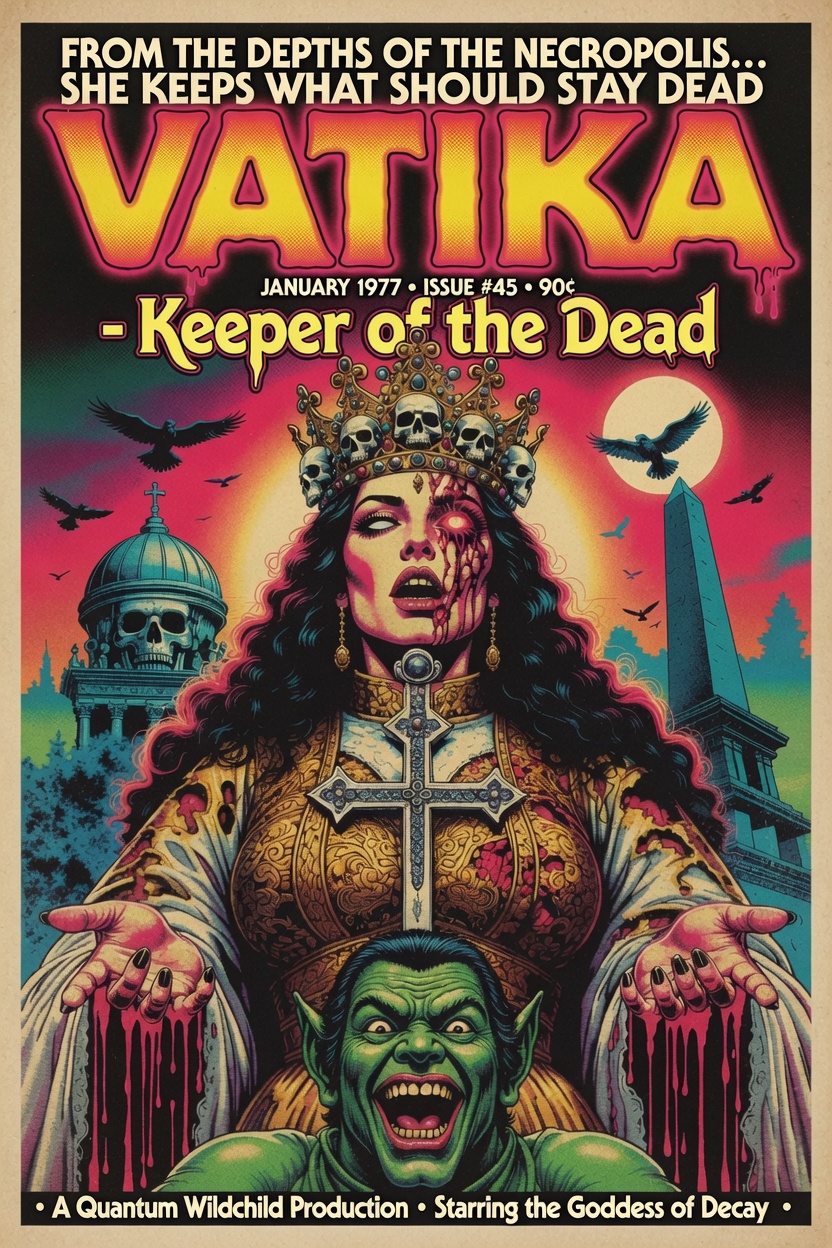
Her name was Vatika, sometimes rendered Vatica. She was the Etruscan goddess of the underworld, guardian of the necropolis, keeper of those who had passed. Her duty was to watch over the dead on that hillside. The hill took her name. The territory around it became known in Latin as the Ager Vaticanus, the Vatican territory. The Romans considered it unwholesome ground, frequented by the destitute, used by Caligula and Nero for chariot exercises and public spectacles, including the execution of Christians.
The etymology of Vatika flows directly into the Latin prophetic vocabulary. The root vatis means soothsayer, prophet, seer. From it comes vaticinatio, foretelling, prophecy, the prophetic act. And from the same Proto-Indo-European root, the word wet, meaning to blow, to inspire, to spiritually arouse, comes also the Old English wod, meaning frenzied, and the name of the god Woden. The Vatican is etymologically connected to Woden. The hill of the dead goddess is the hill of the seers. They are the same meaning, expressed in the same word, sharing the same ground.
Vatika also lent her name to a bitter grape that grew wild on the necropolis slope. Peasants made it into famously unpleasant cheap wine. But when eaten, the grape caused hallucinations. The Romans took this property into their vocabulary as a synonym for prophetic vision. The Latin vaticinor, to foretell and prophesy, carries this grape's altered-state quality into the language of institutional prophecy. The oracle spoke from the dead goddess's hillside. The seer ate her fruit.
Vatika's companion in the Etruscan underworld tradition was Vanth, the winged female psychopomp, from the Greek: psyche (soul) and pompos (guide, conductor, escort). The guide of souls. Not their creator, not their judge, not their destroyer. Simply the one who walks them across, who escorted souls from the moment of death to the gates of the underworld. Snake-haired, breasts uncovered, wings spread, Vanth attended every dying person from the instant of their last breath. She then handed the soul to Charun, the male guardian with hammer and blue skin, who conducted it through the gate to Aita, the Etruscan lord of the dead. But it was Vatika who held the ground. It was her hill. It was her necropolis.
Do not confuse Charun with Charon. The latter is Greek, the working ferryman. Austere, functional, ancient even by Olympian standards. Hesiod barely mentions him. He accrues detail slowly across centuries, the obol, the skiff, the grey cloak, the pole. In Aristophanes he is already half-comic, a grumbling bureaucrat of the dead. By the time Dante takes him he has become genuinely terrible: Caron dimonio, con occhi di bragia (Charon the demon, with eyes of burning coal). But even Dante's Charon is essentially the same figure: the riverman, the threshold worker, the one who does not judge, only transports.
Charun is Etruscan. And he is something else entirely. Wielding a hammer, sometimes as a serpent. His blue or greenish skin in the tomb paintings, the colour of putrefaction, of something already in process. His face is frequently monstrous: hooked nose, pointed ears, tusks or fangs in some depictions. He does not wait at a river. He is present at the moment of death itself, sometimes shown striking the dying with the hammer, or standing guard over the body, or escorting the soul through a landscape that is not a river crossing but something more labyrinthine, more genuinely subterranean.
The Church of Constantine built the first basilica over the traditional site of Peter's tomb in the early 4th century. It was built directly on top of the Etruscan necropolis. The Vatican Hill was not included within the city walls of Rome until Pope Leo IV expanded them between 848 and 852 AD specifically to protect St. Peter's Basilica. For eight centuries, the most sacred site of Western Christendom sat outside the city, on the dead goddess's hill, carrying her name, above her city of the dead.
The institution that has spent two millennia as the ultimate authority on what is sacred and what is pagan, what is divine revelation and what is diabolical superstition, built its headquarters on a pre-Christian female goddess's necropolis, kept her name in every language on earth, and never acknowledged any of it.
The obelisk Caligula brought from Heliopolis, which stood in Nero's circus on the same hill where Christians were executed, was moved to the centre of St. Peter's Square in 1586 by Sixtus V, where it still stands: an Egyptian solar monument in the forecourt of the papacy, consecrated to a sun cult, on a dead goddess's hill.
Beneath the basilica floor the hill keeps older secrets still. Excavations ordered by Pius XII in the 1940s revealed a functioning pagan necropolis directly underneath, mausolea of prosperous Roman families decorated with the full imagery of the mystery religions, Dionysiac symbolism, solar motifs, the iconography of Egyptian cult. One vault carries a mosaic of a radiant figure ascending in a solar chariot. On the same hill, attested by multiple inscriptions, stood the Phrygianum, the principal sanctuary of Cybele and Attis, the dying and rising god whose death was mourned and resurrection celebrated each year at the spring equinox in a festival called the Hilaria. The ritual centrepiece was the taurobolium: the initiate descended into a pit beneath a grating, above which a bull was sacrificed, and was drenched in the blood falling through. The initiate emerged reborn. Tertullian, defending Christianity against the accusation that baptism was merely the taurobolium in new clothes, did not deny the structural identity of the two rites. He argued instead that Satan had anticipated the true sacrament and counterfeited it in advance. The resemblance, in other words, was so precise that it required supernatural explanation. The Church's own apologist provided that explanation, and in doing so confirmed what he was trying to refute.
Vatika was not erased. She is on every letterhead, every papal encyclical, every news headline that mentions the Holy See. Right there, in the first syllable.
V. Georgetown, Ohio, and the Intelligence Pipeline
When the Jesuits returned in 1814, they returned into the age of the nation-state and the coming age of intelligence as organised statecraft. Their educational network, which had always been their primary instrument of influence, expanded into the new institutional landscape with the same methodical precision they had applied to the courts of Renaissance Europe.
Georgetown University in Washington DC, founded in 1789 by a Jesuit on the recommendation of Benjamin Franklin, became the most important pipeline between Jesuit formation and the US national security apparatus. By 1986, it was documented as the number one school for CIA recruits. Henry Kissinger taught at its School of Foreign Service and filled the White House and State Department with his students. The roster of Georgetown alumni in senior national security positions includes CIA Directors, Directors of National Intelligence, Federal Reserve chairs, and seven White House Chiefs of Staff.
Former CIA Director Leon Panetta stated directly that throughout his time running both the CIA and the Pentagon, he was surrounded by Georgetown graduates at every level. This is not conspiracy. It is institutional pipeline, as transparent as the Harvard-to-State-Department connection, and as old as the Jesuit method of forming minds at the point of formation.
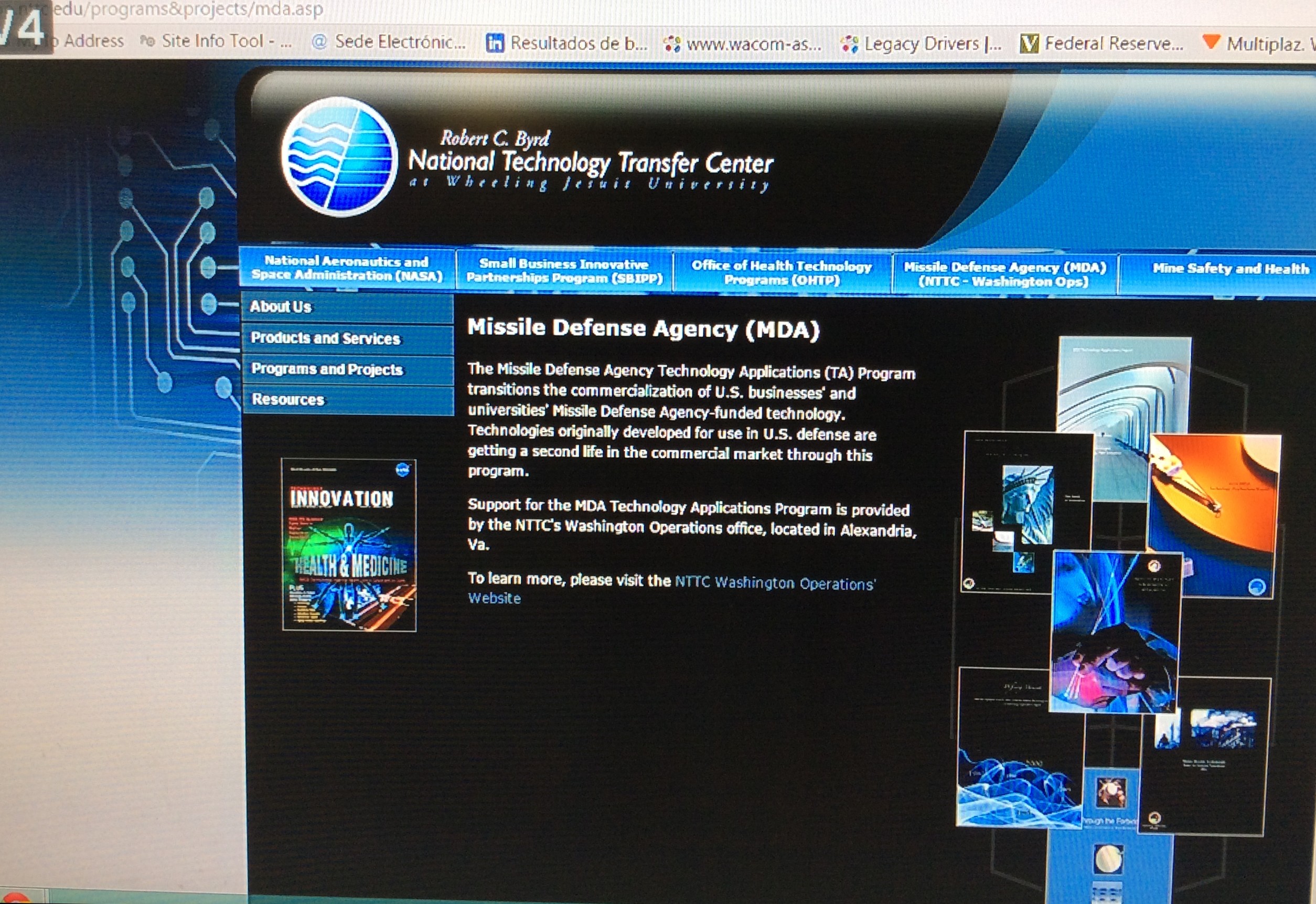
Ohio extends this geography. Xavier University in Cincinnati, the fourth-oldest Jesuit institution in the US, founded 1831, has been formally designated by the NSA and the Department of Homeland Security as a National Centre of Academic Excellence in Cyber Defence. A Jesuit university in Ohio, credentialed by the NSA, running programmes in cybersecurity, artificial intelligence, and reverse engineering. John Carroll University in Cleveland, the other Ohio Jesuit institution, sits forty-five minutes from Wright-Patterson Air Force Base in Dayton, home of the Air Force Research Laboratory, the successor to the foreign technology division, one of the most sensitive aerospace research installations in the country.
The Ohio Jesuits are not running weapons programmes. They are producing the cleared personnel who populate them, through the same formation-to-placement pipeline that Georgetown operates at national level. The geography is not random. Cincinnati and Cleveland bracket a defence industrial corridor that runs through Dayton to the eastern aerospace complex. The Jesuit institutions sit inside it, quietly, institutionally, without announcement.
VI. Clementine Rings the Moon
On 25 January 1994, a spacecraft named Clementine was launched from Vandenberg Air Force Base on a Titan II rocket. Its official designation was the Deep Space Program Science Experiment. It was described to the public as a joint NASA and Department of Defense lunar mapping mission. This was accurate as far as it went.
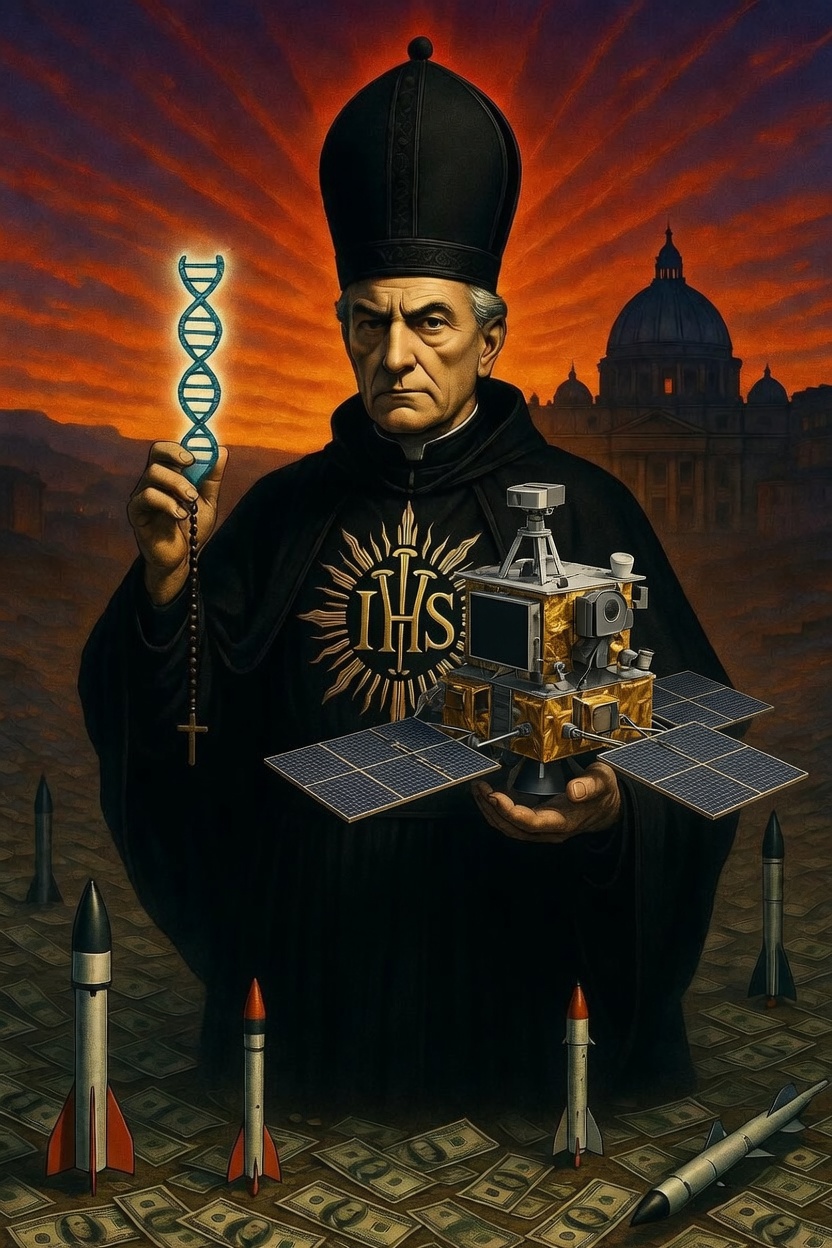
What it did not go far enough to say was the precise institutional relationship between the two partners. Clementine was a BMDO mission, the Ballistic Missile Defense Organization, the renamed successor to Reagan's Strategic Defense Initiative, popularly known as Star Wars. Its principal objective was not lunar science. Its principal objective was to space-qualify the most advanced lightweight imaging sensors and component technologies ever developed by the Department of Defense, using the Moon, a near-Earth asteroid, and the spacecraft's own interstage adapter as target practice. The sensors had been designed and calibrated by Lawrence Livermore National Laboratory, the nuclear weapons laboratory. The spacecraft had been integrated by the Naval Research Laboratory. NASA provided the civilian wrapper, the Deep Space Network infrastructure, and the science framing.
Science was explicitly the secondary mission. This was stated in the programme documents without embarrassment. The primary mission was weapons technology validation conducted in deep space under civilian institutional cover.
Clementine spent two months in lunar orbit. It mapped the entire lunar surface in multiple spectral bands. It discovered ice at the lunar south pole. And in doing so it rang the Moon like a bell, sending back data that shaped every subsequent lunar mission for the following quarter century. The scientific return was genuine and significant. The weapons technology validation was equally genuine and equally significant, and considerably less discussed.
This is the NASA and BMDO relationship in its clearest documented form. Not NASA transferring civilian technology to the military, which is the public framing, but the military using NASA's civilian institutional identity, its public credibility, its infrastructure, and its science communication apparatus to conduct weapons research in a context that the public and international community would receive as exploration rather than armament.
Clinton had come into office pledging to kill Star Wars, and in May 1993 his administration announced the end of the Star Wars era. What it announced was a name and a shift of emphasis, from national missile defence to theatre missile defence. The $3.5 billion annual budget moved intact into the newly formed BMDO. The programme did not end. It changed its name, acquired a civilian co-brand, and launched a spacecraft named after a folk song about a girl who dies young. The song's chorus: you are lost and gone forever, dreadful sorry, Clementine.
VII. The Bow Tie
What has been assembled here is not a theory. It is a thread, or rather several threads that share a common texture, visible only when held at a certain angle to the light.
The thread begins with a soldier convalescing on a sickbed in Pamplona, reading lives of saints for want of better material, passing through a circle of Illuminated Ones who believed direct communication with God made the Church structurally redundant. He is charged with their sympathy. He escapes. He builds the most effective transnational institutional network of the early modern world using methods that owe something to what he passed through and everything to what he had always been: a soldier with a gift for organisation.
His order is suppressed. It goes underground. Three years later in the same Bavarian city a new order emerges with the same architecture and a different name. The original survives underground for forty-one years, returns, and spends the next two centuries penetrating every significant institutional structure in the Western world: courts, universities, intelligence services, and finally the papacy itself. The Black Pope becomes the White Pope.
Benjamin Franklin, Freemason, diplomat, and the most architecturally minded of the US founding generation, recommended in 1789 that the new republic's capital place its premier university in Jesuit hands. Georgetown opened that same year, four miles from where the constitutional government would sit. In the US, Jesuit universities anchor a pipeline from formation to clearance. Georgetown produces CIA directors, National Security Advisors, Federal Reserve chairs, and Chiefs of Staff. Ohio Jesuit institutions sit inside a defence industrial corridor and carry NSA credentials. The pattern is not hidden. It is simply never assembled in one frame.
And in 1994, a spacecraft built by the Ballistic Missile Defense Organization, validated by Lawrence Livermore, integrated by the Naval Research Laboratory, and wrapped in NASA civilian branding, is launched toward the Moon. Its principal objective is weapons technology testing. Its secondary objective is science. It maps the entire lunar surface, discovers ice at the south pole, and rings the Moon like a bell for two months. The echo is still being studied.
And the hill they all sat on, the soldier, the Black Pope, the White Pope, the Freemason founder, the analyst at Langley, was named for a dead goddess whose name means prophecy and hallucination and the boundary between the living and the dead. Her hill had become the headquarters of the institution that mediates between humanity and God. Her name stayed on the building.
The thread running through all of this is not power in the simple conspiratorial sense: a group of men in a room deciding outcomes. It is something more interesting and more durable. It is the persistence of institutional form across reinvention.
The vates on the hill who speaks for the dead goddess becomes the prophet who speaks for God becomes the confessor in the royal court becomes the professor in the School of Foreign Service becomes the analyst in the building at Langley. The function is continuous. The institution changes its name and its cassock and its letterhead. The function does not change.
The water does not change either. John baptised in a river, not a bowl, because immersion required a threshold, neither on one bank nor the other, the initiate suspended in the medium of transformation itself. The Styx and the Jordan are the same river. The taurobolium pit and the baptismal font are the same chamber. The function preceded the theology by centuries and outlasted every attempt to make it exclusive.
The threshold between the living and the dead, between what is known and what is hidden, between the civilian and the military, between science and weaponry: these thresholds require guardians. Vatika guarded hers with a necropolis and a bitter grape. The Society of Jesus guards its with universities and intelligence pipelines. The Ballistic Missile Defense Organization guards its with a spacecraft named after a girl who is lost and gone forever, mapping a dead world from orbit with weapons sensors, wrapped in the language of exploration and discovery.
The cat brought all of this in and dropped it on the kitchen floor. The question it raises is not who is pulling the strings. The question is why the same strings keep appearing, across five centuries and three civilisations, tied between the same two fixed points: the place where the dead are kept, and the place where prophecy originates.
Vatika knew the answer. She guarded it for millennia before anyone thought to build a basilica over her bones.
VIII. The Apparatchik Does Not Care Who Sits There
A closing note on the chair itself. The Jesuit on the throne is already history: Francis, the first of the order to hold it, died in 2025, and the man who followed is an Augustinian, born in the United States but a Peruvian by adoption, decades of his life spent in the Andes rather than the imperial capital. The thread does not snap there, it changes hands. The new pope keeps the globalist register of his predecessor, the ecumenism, the talk of a single human family, while the machinery the Jesuits built into the Curia, the doctrinal posts, the financial offices, the very constitution that reorganised the place, sits untouched beneath him. That is the tell of a real apparatus. It does not need its founders in the chair. The order spent five centuries learning to be indispensable to whoever sits there, and the proof is that the chair changed orders, changed country, changed hemisphere, and nothing else moved.