
Climate Engineering and Warfare
Origins and Current Overview
Foreword
In 1996, the United States Air Force published Weather as a Force Multiplier: Owning the Weather in 2025, outlining a comprehensive timeline for operational atmospheric control capabilities. Nearly three decades later, the evidence suggests mission accomplished. Weather warfare is operational in 2025, disguised as climate science, and pursues environmental engineering solutions that justify expanded military, scientific, corporate, sovereign state and multinational atmospheric, and authoritarian, control.
This USAF vision emerged from a rich ecosystem of defence think tanks developing atmospheric warfare concepts through academic research programs, representing strategic brilliance serving a broader, lacklustre, technocratic globalist objective of total dystopian weather domination over Earth's resources and population. The USAF provided the doctrine, but implementation became a globalist institutional project disguised as climate emergency response.
Human Sacred Wisdom Teachings and Atmospheric Sovereignty Memory
Rigveda 1.23.20-22, Divine Atmospheric Sovereignty. The waters are controlled by Indra's power. He who makes the lightning flash and thunder roar, he directs the rain-bearing clouds. By his will the seasons turn, and by his command the winds blow.
Job 37:9-13, Divine Weather Control. Out of the south comes the whirlwind, and cold out of the north. By the breath of God frost is given, and the breadth of the waters is straitened. Also by watering he wears the thick cloud, he scatters his bright cloud. And it is turned round about by his counsels, that they may do whatsoever he commands them upon the face of the world in the earth. He causes it to come, whether for correction, or for his land, or for mercy.
Ecclesiastes 3:1-8, The Wisdom of Seasons. To every thing there is a season, and a time to every purpose under heaven. A time to plant, and a time to pluck up that which is planted. A time to kill, and a time to heal, a time to break down, and a time to build up.
Tao Te Ching, Chapter 8, Natural Water Harmony. The highest good is like water, which nourishes all things and does not compete. It flows in places men reject and so is like the Tao. Water overcomes the hard and strong by nothing more than remaining true to its essential nature.
Throughout humanity's sacred texts, atmospheric control represents the ultimate expression of sovereignty, the power to determine when crops grow or fail, when populations flourish or perish, when civilisations rise or collapse through environmental command. Ancient wisdom traditions universally recognised weather modification as the fundamental expression of absolute authority over creation itself, while simultaneously teaching that natural water systems operate through harmony rather than dominance.
Current atmospheric engineering operations follow this ancient pattern precisely. Those who control the weather claim the authority of gods over human populations, determining through technological means the environmental conditions that previous ages attributed to divine providence, yet it lacks the spiritual wisdom and harmony of traditional understanding.
The NEXRAD networks, satellite constellations, and electromagnetic field generators serve as modern instruments of weather sovereignty, replacing both divine authority and natural harmony with institutional technological control over the atmospheric systems that determine human survival.
Our shared wisdom teachings reveal that weather control has always been the ultimate power, and those who achieve it position themselves as rulers over the basic conditions of earthly existence. However, technological transcendence without spiritual wisdom only creates a dystopian god-complex rather than enlightened stewardship.
Throughout recorded history, humanity has sought to negotiate with the sky's sovereign power. We have tried. We have fasted and invoked it with prayers, raindances, sacrifices, turned cloaks inside out in salat al-istisqa, danced with snakes, rung consecrated storm-bells, and fired cannons into the heavens, all acknowledging that weather remains the visible signature of a power greater than ourselves. In the twentieth century the methods changed, dry ice, silver iodide, hygroscopic flares, and classified military programmes, but the underlying impulse has not: to reach upward and, by whatever means, persuade or compel the sky to yield its rain or withhold its storm. Even the brief, controversial experiments of Wilhelm Reich with directed orgone belong to this same ancient lineage, an attempt, more self-consciously modern yet no less sincere and reverent, to participate in the old conversation between earth and heaven.
Chapter One: Twentieth Century Historical Development of Climatology
The Birth of Modern Meteorology, 1916
An inexact, observational, empirical, forecasting science emerged from World War I military aviation requirements, where atmospheric prediction became critical for aerial combat effectiveness, bombing accuracy, and flight safety. It established the foundational link between climate science, warfare, and aviation that would evolve into weather modification capabilities within decades.
Agricultural Weather Modification, 1940s to 1950s
Documented weather modification began through agricultural applications utilising chemical cloud seeding techniques designed to enhance precipitation for drought relief and crop protection. Project Cirrus, initiated in 1947 through collaboration between General Electric and the US military, established the scientific foundation for atmospheric manipulation through silver iodide particle dispersal into supercooled clouds, achieving precipitation enhancement across agricultural regions experiencing drought conditions. These early experiments, conducted by researchers Vincent Schaefer and Irving Langmuir, demonstrated that atmospheric conditions could be altered through technological intervention, therefore establishing weather modification as legitimate scientific research with practical agricultural applications.
Silver iodide cloud seeding operations expanded throughout the American West during the 1950s, with programs in Colorado, Wyoming, and California achieving measurable precipitation increases for agricultural water management and hydroelectric power generation. These operations, conducted through state agricultural departments and private contractors, created the operational infrastructure and technical expertise necessary for large-scale atmospheric modification while maintaining focus on legitimate agricultural and water resource objectives that generated public support and institutional funding.
International agricultural weather modification programs developed simultaneously across other nations, with silver iodide operations in Australia, Canada, and various European countries targeting drought relief and agricultural productivity enhancement. Soviet agricultural research included atmospheric modification experiments utilising both chemical cloud seeding and electromagnetic field techniques for precipitation enhancement across collective farming regions, establishing weather modification as a standard agricultural technology rather than experimental research.
Military Applications Development, 1960s to 1970s
The transition from agricultural weather modification to military atmospheric warfare occurred through the adaptation of agricultural cloud seeding techniques for strategic military objectives during Cold War conflicts. Operation Popeye, conducted from 1967 to 1972 during the Vietnam War, utilised established silver iodide dispersal methods to extend monsoon seasons over enemy supply routes, the Ho Chi Minh trail, demonstrating that agricultural weather modification techniques could provide military advantages through precipitation manipulation targeting specific geographic regions for strategic disruption.
Chemical atmospheric modification expanded beyond silver iodide to include barium salt aerosols and aluminium particulate dispersal systems designed to enhance electromagnetic conductivity across large atmospheric volumes. These chemical enhancement programs, documented through military records, adapted agricultural aerosol dispersal infrastructure for electromagnetic field manipulation applications, transforming legitimate agricultural weather modification into atmospheric engineering capabilities with military applications.
Research into alternative atmospheric modification techniques included investigation of Wilhelm Reich's orgone research and electromagnetic field manipulation methods that had demonstrated atmospheric control capabilities independent of chemical intervention.
However, institutional focus remained on chemical and electromagnetic approaches that provided technological control over atmospheric conditions rather than the consciousness-based techniques Reich had developed, leading to suppression of Reich's research while preserving reductionist technological approaches suitable for institutional deployment.
Institutional Infrastructure, 1980s to 1990s
Weather modification transitioned from experimental research to operational infrastructure through dual-use technology development that embedded atmospheric control capabilities within legitimate meteorological and communication systems.
The deployment of NEXRAD, Next Generation Radar, systems across the US created widespread electromagnetic field generation capabilities disguised as weather monitoring infrastructure, utilising dual-polarisation transmission technology providing both legitimate meteorological data and electromagnetic field coordination necessary for atmospheric modification operations.
European atmospheric modification infrastructure developed through the OPERA radar network and related systems that coordinate with NEXRAD installations for hemispheric electromagnetic field generation capabilities. These big golf ball shaped radomes are often located near major civilian airports or airbases. These systems, officially designated for weather monitoring and aviation safety, provide the technological foundation for coordinated atmospheric modification across international boundaries while maintaining legitimate operational cover through essential meteorological and safety functions.
Whistleblower documentation throughout this period revealed expansion of weather modification programs beyond agricultural applications to include atmospheric engineering for undisclosed objectives. Multiple sources reported coordinated aerosol deployment operations, electromagnetic field generation for atmospheric heating, and pressure system manipulation conducted through dual-use infrastructure that serves both legitimate meteorological functions and covert atmospheric modification operations.
Atmospheric sampling downwind from aerosol operations confirms persistent deployment of silver iodide, barium salts, aluminium particulates, and over one hundred organic and inorganic compounds including engineered nano-scale and micro-scale payloads.
These delivery vectors have become increasingly complex with the passage of time, evolving from basic cloud seeding agents to sophisticated multi-component atmospheric dispersal systems with electromagnetic interaction capabilities and targeted biological uptake mechanisms.
Contemporary Operations, 1990s to the Present
The technological maturation of weather modification capabilities coincided with growing institutional recognition that atmospheric control represented the ultimate societal management tool, enabling direct environmental pressure that creates compliance through survival necessity rather than political consensus. Unlike conventional leverage systems requiring public support, atmospheric engineering affects entire populations regardless of political alignment, resulting in codification of weather warfare doctrine that established a comprehensive deployment timeline for achieving weather dominance through dual-use technology cover and environmental protection justification. The United Nations Framework Convention on Climate Change in 1992 and the subsequent Kyoto Protocol in 1997 provided the perfect institutional framework for atmospheric modification research disguised as climate emergency response, with UNEP funding coordinating international atmospheric research programs that evolved into operational weather modification networks.
Weather as a Force Multiplier: Strategic Doctrine
The 1996 United States Air Force publication Weather as a Force Multiplier: Owning the Weather in 2025 represented the formal institutional acknowledgement of atmospheric modification capabilities that had encompassed many overt, covert and classified research programs for over four decades.
This document consolidated decades of weather modification experience into a comprehensive strategic vision, establishing a technological timeline for achieving complete atmospheric control through deployment of electromagnetic field generation networks, coordinated aerosol dispersal systems, and ionospheric heating capabilities integrated with existing meteorological and communication infrastructure.
The USAF timeline provided an institutional roadmap for transitioning from experimental weather modification to operational atmospheric engineering, outlining specific technological requirements and deployment schedules necessary for achieving weather control by 2025. This strategic framework acknowledged that atmospheric engineering represented a permanent military advantage rather than a temporary experimental capability, requiring comprehensive infrastructure development and operational protocols that could maintain weather control capabilities across multiple conflict scenarios and institutional objectives.
The 2025 target date set in the USAF document provided essential context for understanding subsequent atmospheric modification infrastructure development, including NEXRAD radar network expansion, satellite constellation deployment, and dual-use electromagnetic systems that serve both legitimate meteorological functions and covert atmospheric engineering operations. The strategic timeline demonstrates institutional commitment to weather control that transcends political administrations and budgetary cycles, revealing atmospheric engineering as a permanent institutional priority rather than a research program.
Institutional Cover and Deep Public Deception
The transition from military weather warfare doctrine to operational atmospheric engineering required a comprehensive public deception framework that could justify massive infrastructure investment while maintaining plausible denial. Climate emergency doctrine provided the perfect institutional cover, enabling atmospheric engineering infrastructure deployment under environmental protection justification while attributing observable climate disruption to natural emissions requiring technological intervention.
This strategic deception transforms atmospheric engineering from military weather warfare into essential environmental protection infrastructure. The deployment eliminated natural climate sovereignty while positioning institutional atmospheric management as a permanent requirement for environmental survival.
Chapter Two: Solar Radiation Modification, Climate Engineering and Weather Warfare 2025 and Beyond
Climate Bait and Switch: Decoy Test Cancellation and Recent Massive Funding
In March 2024, Harvard University cancelled its Stratospheric Controlled Perturbation Experiment, SCoPEx, due to take place in Sweden. The corporate media coverage hailed public opposition's victory over geo-engineering research. Indigenous Sami groups, environmental activists, NGOs, and concerned scientists successfully stopped a balloon experiment planning to launch and release into the stratosphere a two kilogram payload of calcium carbonate from Kiruna, the Swedish Space Corporation's balloon launch facility. The narrative was clear: transparent solar geoengineering research faced determined, concerned, public resistance in democratic societies. The experiment died. The threat passed. Except nothing stopped. Everything went full tilt forward.
Follow the Money and Give Your Smartphone a Rest
As SCoPEx's demise generated headlines, Solar Radiation Modification funding soared to unprecedented levels in 2024 and 2025. The money trail reveals what public rhetoric conceals.
In May 2025, the United Kingdom's Advanced Research and Invention Agency announced over 60 million pounds in Solar Radiation Modification research funding, the largest government solar geoengineering program in history. Twenty one teams received grants spanning governance, computer climate modelling, and critically, small-scale outdoor experimentation. The UK government explicitly authorised field tests that the cancelled Harvard program could never conduct. What changed? The research moved from transparent academic balloon experiments requiring public approval to government-funded programs operating under national security and climate emergency frameworks.
The Simons Foundation committed 164 million dollars for SRM covering 2025 to 2029, with 10 million in annual ongoing funding. Fourteen international research teams received grants exploring stratospheric aerosol injection, marine cloud brightening, and cirrus cloud thinning. The foundation's program explicitly focuses on fundamental scientific knowledge gaps, the same research SCoPEx intended to address through a single balloon flight releasing less than two kilos of material. Instead of one visible test, millions of dollars were earmarked to fund research requiring no public notification or consent.
The United States government, through NOAA's solar geoengineering research program, provides approximately 11 million dollars annually for SRM research. From 2019 to 2022, NOAA spent 22 million conducting outdoor tests that received no comparable media attention even close to SCoPEx's cancelled balloon flight performance. Current programs continue with expanded budgets and zero public awareness. The research takes place, the tests deploy, the atmospheric interventions proceed, all while the public believes geoengineering remains theoretical following SCoPEx's highly publicised failure.
Philanthropic funding from the Quadrature Climate Foundation added 40 million dollars over three years. SilverLining, a climate intervention advocacy organisation, secured 20.5 million from multiple foundations including Quadrature, Pritzker Innovation, the 2040 Foundation, and others specifically for governance, equity, and engagement initiatives on near-term climate risk and climate intervention. The language shifted from research to intervention, from should we to how do we, from transparent academic inquiry to governance frameworks enabling deployment.
The above initiatives are the warmer, fuzzy, public side. The total annual SRM research spending would really need to include the classified military atmospheric programs, an estimated 500 million dollars or more annually through black budget allocations under national security classifications preventing public disclosure of actual spending levels. Dual-use infrastructure investment at around 2 billion annually in NEXRAD upgrades, OPERA network expansion, satellite constellation deployment, and 5G infrastructure serving both legitimate communications and potential atmospheric modification capabilities. Creative nomenclature spending of 100 million or more annually through programs labelled as climate resilience, atmospheric research, weather prediction enhancement, and environmental monitoring that fund atmospheric modification research under terminology avoiding geoengineering classification. Corporate research and development programs at 200 million or more annually through private aerospace, telecoms, and defence contractors developing atmospheric modification technologies under proprietary research classifications protected as trade secrets. International coordination programs at 150 million or more annually through UN-brokered, NATO, EU, and bilateral research agreements funding coordinated atmospheric research under climate science and environmental protection classifications.
UN climate finance mechanisms channel hundreds of billions annually through the Green Climate Fund, the Adaptation Fund, and bilateral climate finance programs, with actual atmospheric modification research buried within 100 billion or more in annual climate funding streams that dwarf the laughable corporate fact-checked publicly acknowledged geoengineering research budgets.
Actual total atmospheric modification funding likely exceeds 15 billion dollars annually. More money, more programs, more outdoor tests, and vastly less public awareness than a cancelled Harvard balloon test in Sweden that released nothing.
Rhetoric Shift: From Should We Research to How To Govern Deployment
The Degrees Initiative Global Forum in Cape Town, South Africa, in May 2025 marked a critical inflection point. The largest gathering of solar geoengineering experts to date, spanning philosophy to engineering, developed and developing nations, convened not to debate whether SRM research should occur but to establish governance frameworks for deployment. The emphasis shifted to include developing nations in decision making, ensuring informed and confident representation from the Global South in conversations about technologies that will affect them whether they participate in decisions or not.
Forum participants also acknowledged that SRM is not a replacement for emissions reduction, phrasing that appears in virtually every current Solar Radiation Modification document, report, and funding announcement. This is acceptance language. This is normalisation. The debate has moved from if to when and how. Nobody at Cape Town questioned if SRM research should proceed. The discussions centred on responsible research conduct, governance mechanisms for deployment, and risk management frameworks for operational programs.
The Degrees Initiative itself demonstrates the shift. Established over a decade ago as the Solar Radiation Management Governance Initiative, the organisation now funds nine teams of social scientists from Argentina, Bangladesh, Brazil, Ghana, India, Mexico, Pakistan, and the Philippines to research socio-political dimensions of Solar Radiation Modification. Ten climate modelling teams received renewed funding for two additional years to study how SRM deployment would affect regional climates, glaciers, monsoons, disease vectors, and marine ecosystems. These are not studies asking should SRM exist but how it will affect these regions when deployed.
The research assumes deployment. The governance discussions assume deployment. The funding structures assume deployment. What remains unacknowledged is that operational programs utilising commercial aviation fuel additives and weather radar networks may have been deploying stratospheric aerosols and electromagnetic atmospheric manipulation for decades while public attention focused on transparent academic research programs designed to fail.

Marine Cloud Brightening: Outdoor Tests Proceed Without Opposition
While public attention fixated on the SCoPEx cancellation, marine cloud brightening experiments proceeded with minimal scrutiny. Small-scale field tests conducted on Australia's Great Barrier Reef in 2024 dispersed seawater aerosols to enhance marine cloud reflectivity, the exact type of outdoor atmospheric intervention SCoPEx could never attempt. The tests generated scientific papers, provided data for climate models, and established proof of concept for at-scale deployment using fleets of unmanned rotor ships spraying seawater mist into marine atmospheres.
No indigenous groups protested. No environmental organisations demanded cancellation. No media coverage generated public awareness comparable to SCoPEx. The experiments occurred, the data was collected, the technology advanced, because the tests occurred over open ocean rather than over Sweden, and because they involved seawater rather than calcium carbonate, and also because the organisational structure avoided the transparency that doomed Harvard's program.
The pattern reveals operational strategy. Visible academic programs requiring public approval will be cancelled when opposed. Government and military programs operating under national security or climate emergency classifications will proceed without public notification. Distributed research avoiding single high-profile test sites will escape scrutiny that concentrated visible experiments attract.
The Decoy Function: Public Cancellation Enables Stealth Acceleration
SCoPEx served its purpose perfectly. A transparent academic experiment, extensively documented, subject to independent advisory committee review, engaging with indigenous communities and environmental stakeholders, publishing methodology in peer-reviewed journals. This program demonstrated that democratic oversight works, that public opposition can stop geoengineering research, that concerned citizens have power over atmospheric intervention programs, or so we are led to believe.
The real lesson learned by the institutions funding actual deployment programs was: never again attempt transparent research requiring public consent. Instead, distribute research across multiple low-profile programs, embed it within government agencies operating under climate emergency mandates, classify operational components under national security frameworks, and deploy through existing infrastructure, commercial aviation, weather radar networks, ocean-going vessels, requiring no special authorisation or public notification.
While celebrating SCoPEx's cancellation as evidence that geoengineering faces effective opposition, activists and the concerned public failed to notice that research funding increased fivefold, outdoor experiments proceeded at multiple sites, governance frameworks shifted from if to how, and the infrastructure for distributed atmospheric modification through fuel additives and electromagnetic manipulation continued operating without acknowledgement. Move on. Nothing to see here.
Gone Underground: The Pressure Response
Public and special interest PR backlash against visible geoengineering research drove programs underground. When governments fund classified research, military agencies conduct tests under national security cover, corporations deploy technologies through proprietary supply chains, no opposition materialises as no public awareness exists. See no evil, hear no evil, speak no evil sums it up nicely.
In the meantime, your local weather radar network, NEXRAD installations or EU OPERA radars, transmits high-energy electromagnetic pulses through atmosphere containing elevated concentrations of conductive nanoparticles from aviation fuel additives. This is not theoretical future technology requiring a balloon test in Sweden's Sami Lapland. This is operational infrastructure functioning continuously, justified as meteorological observation, potentially enabling atmospheric manipulation through electromagnetic organisation of aerosol particles.
The funding explosion of 2024 and 2025 represents not the beginning of solar geoengineering research but the surfacing of programs operating covertly for decades.
An Invitation to Check the Sky with Your Own Lying Eyes
The evidence exists above you, if you can pull your attention from the cute Orwellian surveillance device in your hand, that personal panopticon, object of desire, masquerading as a communication tool, and gaze long enough to observe the heavens above. You may need a bit more than our current average fifteen second attention span.
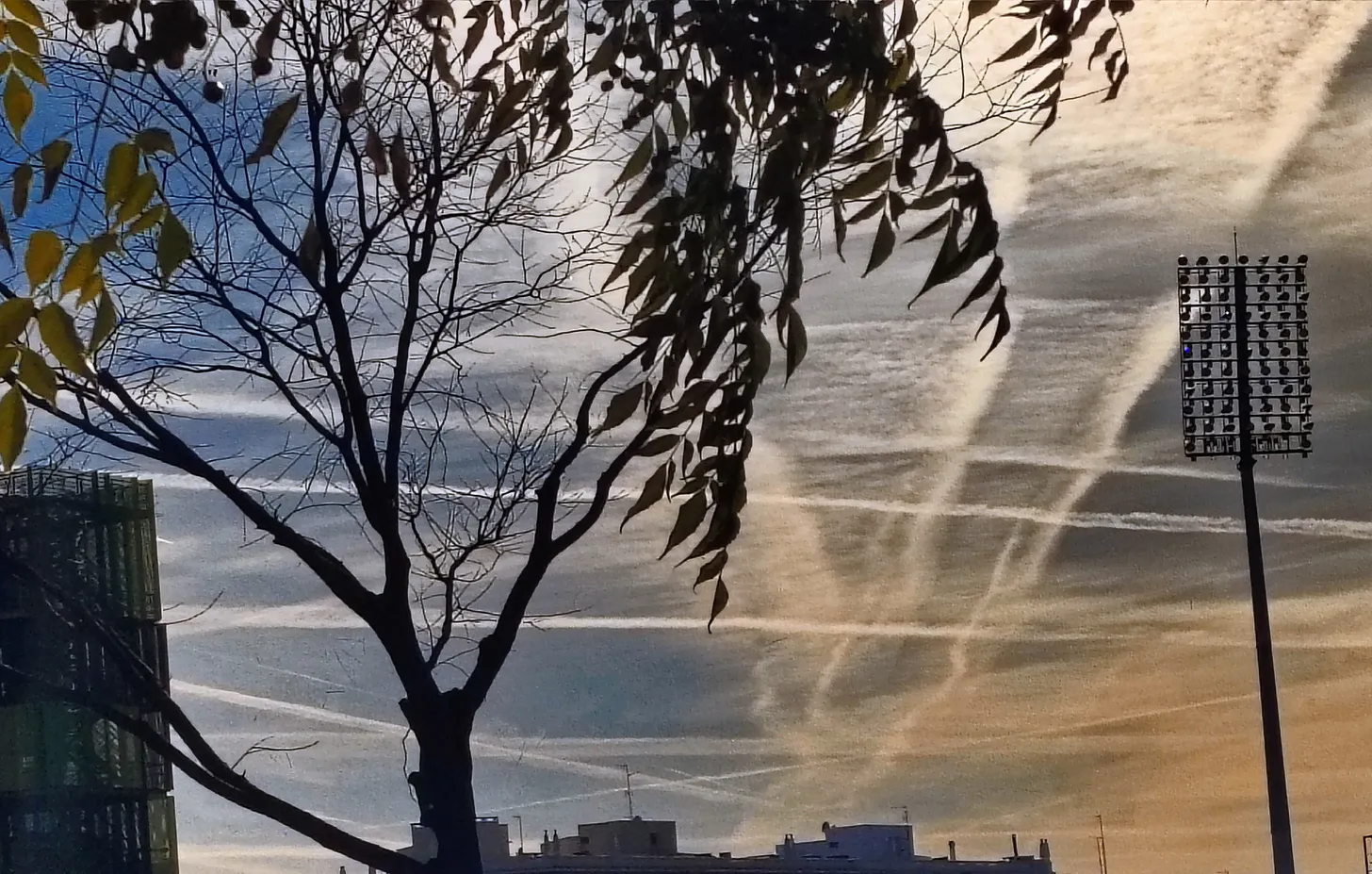
Commercial aircraft crossing overhead leave persistent contrails that spill and spread, grid-like, into a thin, artificial cloud cover, dimming sunlight and altering sky colour. Atmospheric opacity has increased. The quality of light has changed, less direct solar radiation, more diffuse scattered light, altered spectral distribution affecting how colours appear and how plants photosynthesise. Weather patterns have shifted in ways climate models consistently fail to predict accurately despite decades of refinement.
Your local weather radar installation operates around the clock, transmitting electromagnetic energy through the atmosphere supposedly only for precipitation detection. Yet correlation between radar transmission patterns and subsequent weather development, storms steered toward or away from specific regions, precipitation intensified or suppressed, high-pressure systems manipulated, appears in the data for anyone who examines transmission logs against meteorological observations. Learn to detect the electrostatically charged surreal lenticular clouds or those shaped as standing waves.
Observe how the trees in your neighbourhood, if they have not been decarbonised yet, now produce shoots and new branches from the tree bark or roots in response to environmental stress as light quality and atmospheric chemistry is altered. Forests under major flight corridors show elevated stress-induced growth rates compared to control regions with minimal aviation traffic. Plants and seeds respond to light frequency conditions humans do not consciously perceive but which biological systems detect and react to. Sensing specific frequencies is how plants know that spring has arrived, as a certain sunlight wake-up frequency returns on its annual cycle. Unless that frequency happens to be blocked by particulate nano matter in atmospheric suspension.
The sky has changed. The light has changed. Weather patterns have changed in ways exceeding climate model predictions. The technology for atmospheric modification through fuel additives and electromagnetic manipulation exists, is documented in patents, is deployed through operational infrastructure, and produces observable effects matching what decades of covert programs would create.
But this evidence requires looking beyond our screens, observing the physical world, trusting direct sensory experience over official narratives. The smartphone has become a sort of agentic, Orwellian Mesmer phone, capturing attention, shaping perception, mediating reality through algorithms designed to direct awareness away from physical surroundings toward curated digital content, and serves as the perfect tool for preventing public observation of atmospheric modification programs operating overhead, right under our noses.
Put down the dumbphone. It seems many of us cannot. Look up. Become a skywatcher for a week. Observe aircraft contrail behaviour, persistence, and spread grid patterns. Note atmospheric opacity changes throughout the day. Watch weather radar imagery and correlate it with actual weather development. Trust what you observe directly rather than what authorities claim is theoretically impossible despite documentary evidence proving operational capability.
The sky does not lie. The money trail does not lie. The patent record does not lie. The infrastructure exists, the funding flows, the atmospheric effects manifest. What remains is whether anyone will look up long enough to see.
Chapter Three: Weather Radar Network, Insidious Infrastructure for Atmospheric Mischief
NEXRAD: The United States Weather Radar Backbone
The Next Generation Weather Radar network for the WSR-88D, Weather Surveillance Radar 1988 Doppler, and its 159 operational installations provide continuous Doppler radar coverage across the continental United States and coastal regions, each capable of scanning the atmosphere in four to six minutes under standard operation. This joint program of the US Departments of Commerce, Transportation and War is run by the National Weather Service, the Federal Aviation Administration and the US Air Force.
Each NEXRAD installation transmits powerful S-band electromagnetic pulses at ten centimetre wavelengths. These pulses reflect off precipitation particles, allowing meteorologists to measure rainfall intensity, wind patterns, and storm structure. However, the same electromagnetic energy that reflects off raindrops can interact with any conductive particles present in the atmosphere, including aluminium, barium, and cerium nanoparticles described in fuel additive patents.
Continuous upgrades since the 1990s deployment include the Super Resolution upgrade in 2008, increasing spatial resolution and extended Doppler velocity measurement range, and the dual-polarisation upgrade completed by 2013 enabling radars to transmit pulses in both horizontal and vertical orientations. Dual-polarisation capability, while justified for improved weather forecasting, enhances radar ability to interact with atmospheric aerosols through multiple polarisation modes.
OPERA: European Weather Radar Coordination
Europe operates over 200 weather radars across 30 European national meteorological services coordinated by the EUMETNET Secretariat. The OPERA program blankets the continent with overlapping coverage. Established in 1999, the Operational Program for the Exchange of Radar Information creates pan-European radar composite products updated every fifteen minutes, providing continuous monitoring across the continent.
OPERA radars operate primarily in C-band, five centimetre wavelengths, with some X-band and S-band installations, including the Spanish AEMET covering the Valencia region, the UK Met Office operating fifteen of eighteen radars covering the British Isles, Germany's DWD network, France's Météo-France installations, and coordinated systems across Scandinavia, Italy, Eastern Europe, and the Mediterranean. Spain's AEMET is currently upgrading its entire fifteen radar network, adding eighteen C-band dual-polarisation installations by the end of 2026 under the Recovery, Transformation and Resilience Plan, funded by the Brussels NextGenerationEU instrument.
High-Energy Pulse Capabilities and Atmospheric Steering
Weather radars actively transmit high-energy electromagnetic pulses through the atmosphere. When radars transmit into regions containing elevated conductive nanoparticle concentrations, several physical interactions become possible. Conductive particles experience induced electric currents when exposed to electromagnetic fields, creating dielectric heating raising local atmospheric temperature. This heating, applied across atmospheric regions, creates temperature gradients driving air circulation. Steering high-pressure and low-pressure systems becomes theoretically possible through strategic electromagnetic heating.
Multiple radar installations operating in coordination could create electromagnetic interference patterns, standing waves, or directed energy concentrations. Electromagnetic fields would be strongest where radar beams intersect or create constructive interference. Conductive nanoparticles in these regions would experience stronger electromagnetic forces, potentially organising into grid-like structures along field lines. This active organisation of reflective particles would enhance Solar Radiation Modification scattering effects beyond passive aerosol dispersion.
The Proof of Concept: SBX-1 and HAARP
While weather radar networks provide the operational infrastructure, other systems have demonstrated that high-powered atmospheric electromagnetic manipulation technology exists at extreme scales. The Sea-Based X-Band Radar, SBX-1, property of the US Navy and mounted on a semi-submersible platform similar to an oil rig with large radomes, proves phased array radar technology can achieve sufficient power and precision for ballistic missile tracking at 2,500 mile range, requiring detection of baseball-sized objects against atmospheric clutter. The 45,000 transmit and receive modules and classified but obviously substantial power output demonstrate that focusing electromagnetic energy for atmospheric interaction is not theoretical but operational.
The High-Frequency Active Auroral Research Program, HAARP, in Alaska, though now decommissioned from military operation and transferred to the University of Alaska Fairbanks, demonstrated high-powered radio frequency transmission into the ionosphere for atmospheric research. HAARP's stated mission involved studying ionospheric physics, but the facility's 3.6 megawatt transmitter array proved that deliberate electromagnetic heating of atmospheric regions is technically feasible and has been operationally deployed for decades.
These systems provide proof of concept at extreme scales. SBX-1 proves phased array precision. HAARP proved atmospheric electromagnetic heating. Weather radar networks provide the distributed infrastructure covering continental scales where fuel additive aerosols are dispersed. The progression from research installations to operational networks mirrors the pattern observed in other military to civilian technology transitions: capability proven in classified or research programs, technology matured and scaled, deployment via civilian infrastructure providing dual-use cover.
Caveat: Detection Challenges and Evidence Requirements
Proving that weather radar networks are used for atmospheric manipulation requires evidence that current operational practices do not provide.
Researchers would need access to complete radar transmission logs including beam direction, power levels, pulse timing, and operational modes, data that meteorological services treat as operationally sensitive and do not release publicly. Comparing transmission patterns to subsequent atmospheric development and weather system movement would reveal whether coordinated electromagnetic activity preceded or accompanied atmospheric changes inconsistent with natural development.
Atmospheric monitoring detecting unusual electromagnetic absorption, heating, or aerosol organisation patterns correlated with radar operation would constitute supporting evidence. Satellite-based atmospheric chemistry monitors, ground-based aerosol sampling coordinated with radar transmission schedules, and independent spectrum monitoring of radar transmissions could detect atmospheric effects beyond standard meteorological observation.
The 2024 Valencia Floods Case Study
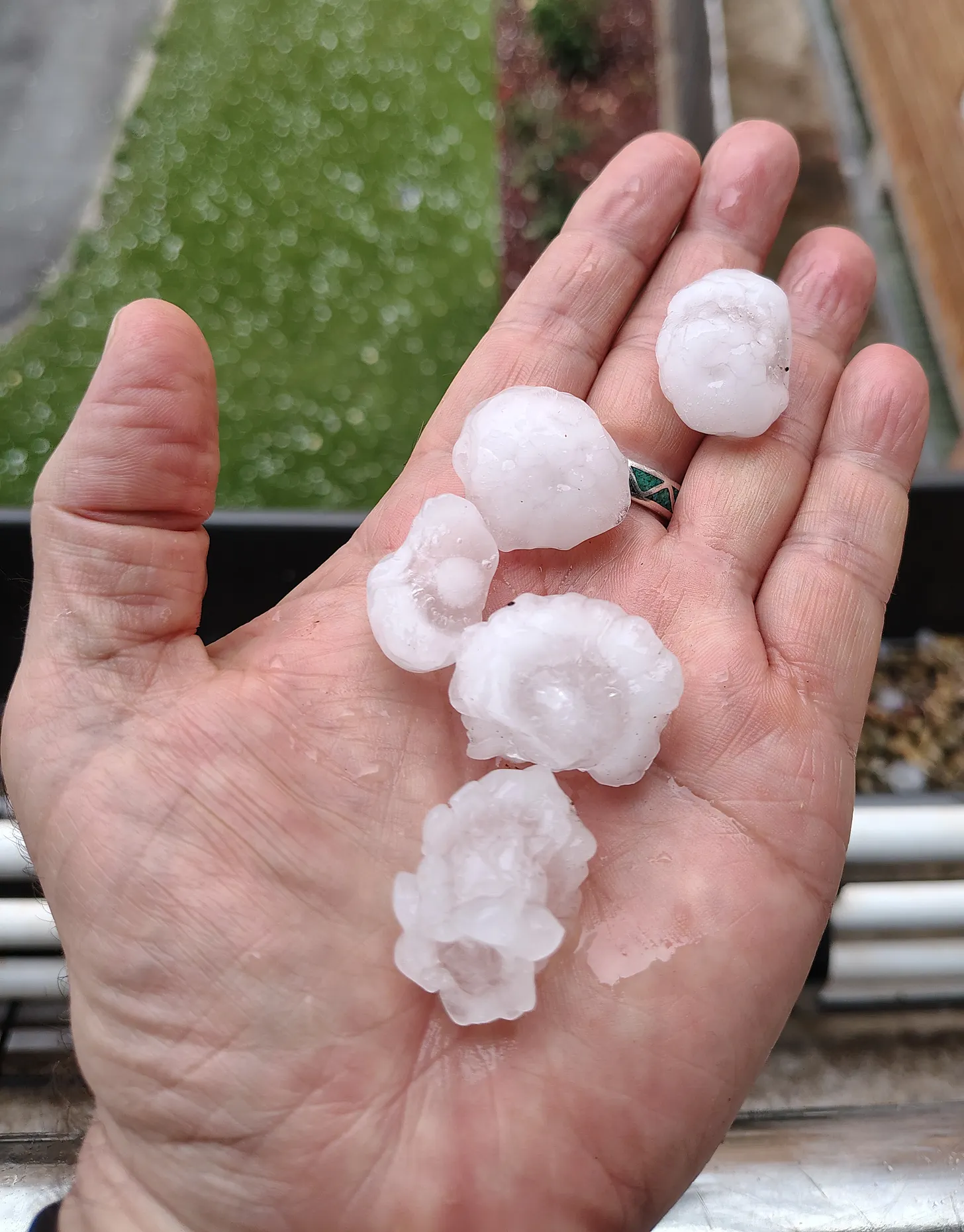
The October 2024 Valencia floods provide a case study warranting independent investigation. Catastrophic rainfall overwhelmed the region, causing widespread flooding and substantial loss of life. Plausible smoking gun suspicions on the level with Maui and Pacific Palisades pre-programmed arson. The standard meteorological narrative attributes the Valencia event to atmospheric conditions including a DANA, Depresión Aislada en Niveles Altos, an isolated depression at high altitude or gota fría, combined with warm Mediterranean surface temperatures creating intense convective instability, compounded by catastrophic political decisions at national, autonomic and local level involving opening reservoir sluices without warning downstream populations of incoming four metre waves of water and mud.
However, precise steering of intense precipitation directly over urban areas, combined with OPERA radar network coverage, raises questions whether electromagnetic atmospheric manipulation contributed to steering the Valencia disaster. Proving such manipulation would require access to radar transmission logs showing beam direction, power levels, and timing correlated with atmospheric development and storm movement, data remaining under meteorological agency control and not publicly available for independent analysis.
The Perfect Agricultural Sovereignty Destruction Operation
The Valencia region, Spain's traditional agricultural heartland with centuries-old orange groves and fertile horticultural lands supported by abundant water resources, may have become Teresa Ribera's primary testing laboratory for systematic agricultural sovereignty transfer to Morocco. Receiving 470 million euros in EIB loans, 300 million in transport infrastructure funding, and European Green Capital 2024 designation under the Valencia 2030 Climate Mission, the region's fertile lands were already earmarked for German hedge fund solar farm developments and water bottling projects prior to the October 2024 DANA floods. The atmospheric modification-induced disaster systematically destroyed Valencia's traditional agricultural orchards while Moroccan food imports, unrestricted by EU legislation and strangling Spanish farmers, appear positioned as a permanent replacement for destroyed Spanish agricultural capacity.
Flight Corridor Radar Coverage and Geographic Correspondence
Geographic correspondence between weather radar network coverage and major commercial aviation corridors is complete. NEXRAD installations strategically positioned near major airports and along transcontinental flight paths provide continuous radar coverage of airspace where commercial aviation disperses fuel additive aerosols. The OPERA network similarly covers European airspace where hundreds of daily flights transit between European cities, transatlantic routes, and Europe to South America corridors.
The geographic overlap enables electromagnetic interaction with aerosol particles dispersed by aircraft along these corridors. If fuel additive programs are operational, radar networks encounter an atmosphere with elevated nanoparticle concentrations precisely along flight paths the radars monitor. The operational elegance provides perfect cover: weather radars perform acknowledged meteorological missions while potentially enabling atmospheric manipulation as a secondary function.
Phased Array Transition and Enhanced Capabilities
Current US NEXRAD replacement programs focus on transitioning to phased array radar technology by 2040. The National Severe Storms Laboratory's Advanced Technology Demonstrator at Norman, Oklahoma, operational since 2018, demonstrates phased array capabilities including full atmospheric volume scans and adaptive scanning focusing on rapidly evolving weather features.
Phased array technology dramatically enhances atmospheric manipulation potential. Rather than mechanically rotating through fixed scan patterns, phased arrays can direct concentrated electromagnetic energy to specific atmospheric regions for extended periods, create multiple simultaneous beams targeting different locations, and rapidly switch between beam configurations. If atmospheric manipulation programs are operational, phased array deployment represents a capability upgrade analogous to transitioning from broadcast radio to focused laser.
Direct Observation of Coordinated Operations
In Europe, daily visual observation in former no-fly zone urban environments reveals aircraft executing roughly ninety degree loose crossover patterns at identical altitudes with sub-two-mile separation, occurring across all flight phases, takeoff climb, cruising altitude, and final approach. These perpendicular intersections create rectangular spray grids over urban areas. The geometry of roughly right-angle crossovers, synchronised across multiple flight phases, some within tight ten second separation windows between aircraft, suggests AI algorithmic coordination transcending conventional human air traffic management protocols.
Aerial grid operations occur round the clock: passenger flights during the day, cargo flights at night. Persistent trails merge into wispy pseudo clouds or standing wave patterns lasting hours, maintaining consistent directional headings pointing toward OPERA radar installations, revealing the radar network's dual function as coordination infrastructure and targeting mechanism.
This program utilises comprehensive aerial infrastructure spanning military aircraft, civil national airlines and low-cost carriers, global courier cargo fleets, heavy drones, light twin aircraft, and crop dusters. Operations include sophisticated loitering patterns: circular patterns for sustained coverage, figure of eight loops for overlapping coverage optimisation, and race track patterns for target saturation, patterns sacrificing fuel efficiency for coverage density.
Field Optical Evidence
Optical evidence is unmistakable when observed directly. Blocking the solar orb with a thumb reveals visible particulate suspension creating diffraction patterns and circular rainbow formations impossible under natural atmospheric conditions. Deep dark blue sunny summer days seem a thing of the past with the current pale, milky blue skies. These circumsolar optical phenomena indicate engineered aerosol density sufficient for prismatic light effects, while overnight cargo traffic creates stringy accumulations visible at dawn. The particulates demonstrate uniform size distribution characteristic of engineered rather than natural atmospheric content.
Chapter Four: Hemispheric Weather Engineering and the Displacement of Atlantic Maritime Systems
The Historical Atlantic Maritime Climate System
For centuries, Azores High pressure system positioning provided Europe with characteristic Mediterranean climate patterns and Atlantic maritime influence. This massive anticyclonic system, traditionally centred between 35 and 40 degrees north latitude in the mid-Atlantic, served as the primary atmospheric steering mechanism determining European summer weather. The Azores High's natural seasonal migration created a delicate balance between Atlantic maritime air masses and continental European weather systems, providing thermal relief and precipitation patterns sustaining European agriculture and urban habitability.
Traditional summer patterns involved gradual northeastward drift bringing the moderating influence of Atlantic maritime air masses. These ocean-influenced systems carried crucial diurnal temperature variation, hot days followed by significantly cooler nights as Atlantic-sourced air provided thermal relief after sunset. Maritime influence created natural cooling cycles preventing sustained heat accumulation characteristic of continental high-pressure dominance. Additionally, Azores High positioning created atmospheric steering patterns blocking northward expansion of African continental air masses.
The Engineered Displacement: Transoceanic Corridor Operations
Satellite imagery observation and analysis suggests large-scale aerosol deployment operations along the South America to Europe diagonal transoceanic flight corridor that precisely targets the atmospheric boundary zones critical to Azores High positioning and strength. These operations do not follow great circle routing efficiency, the most efficient commercial flight path, that characterises normal commercial aviation, but instead maintain consistent flight patterns along atmospheric steering current intersections that influence large-scale pressure system dynamics.
The diagonal corridor from South America to Europe intersects the critical atmospheric zone where Atlantic maritime air masses interact with both African continental systems and European continental influences. Persistent aerosol deployment along this corridor creates artificial atmospheric heating gradients that fundamentally alter the pressure differential dynamics that maintain Azores High positioning and strength. The modification occurs through alteration of radiative heating patterns across thousands of square kilometres of Atlantic Ocean skies, creating persistent atmospheric conditions that weaken traditional Atlantic high-pressure formation while simultaneously strengthening African continental high-pressure systems.
Aircraft operations along this corridor exhibit the same coordination characteristics documented in regional atmospheric modification programs: synchronised timing, formation flying patterns, persistent trail formation, and twenty four hour operational schedules utilising multiple aircraft categories including cargo fleets, military aircraft, and civilian aviation. The scale of operations required for hemispheric pressure system manipulation demands coordinated transoceanic deployment capabilities that span multiple national airspaces and aviation authorities, suggesting coordination and overview at levels beyond single national weather modification programs.
The nature of transoceanic atmospheric modification operations becomes undeniable when analysing flight tracking data that reveals consistent South America to Europe diagonal corridor usage outside standard commercial routing, with aircraft density patterns correlating precisely with seasonal pressure system displacement documented in NOAA and ECMWF meteorological databases. Historical weather station records demonstrate accelerated Azores High migration timing that coincides with increased corridor traffic, while ICAO flight plan databases document coordinated atmospheric research missions and military exercises during peak operational periods. This operational evidence is supported by institutional acknowledgement through NOAA atmospheric research programs studying large-scale modification techniques, EU Horizon 2020 climate intervention projects funding transoceanic monitoring, and scientific literature on stratospheric aerosol injection that details operational requirements matching the observed corridor patterns, creating a comprehensive documentation trail that proves hemispheric weather engineering disguised as routine atmospheric research.
Azores High Displacement and African Continental Takeover
The displacement of the Azores High from its traditional summer eastward migration pattern, where it would move from a 35 to 40 degree north mid-Atlantic position closer to the European continent, blocking African high-pressure systems and providing evening maritime freshness, has created an atmospheric vacuum that the African continental high-pressure systems have already filled. The Sahel high-pressure system, traditionally constrained to African continental regions, has expanded northward and westward to occupy atmospheric territory previously dominated by Atlantic maritime influences.
Results have been severe for southern, eastern and central Spain, the south of France, Italy's south, Sicily and the western Italian coastline, and to a lesser degree Portugal due to its long Atlantic coast. Northern Spain and the Atlantic French coast remain largely unaffected. The summer Azores high pressure system now appears displaced far northward, 55 to 60 degrees north, off the western Scottish coast. This expansion brings to Europe the atmospheric characteristics of African continental weather systems: sustained high temperatures without diurnal thermal relief, persistent dust loading from Saharan sources, the calima, and absence of maritime moisture traditionally providing European summer precipitation.
Jet Stream Disruption
The northward displacement has fundamentally destabilised the jet stream, creating artificial pressure gradients forcing high-altitude wind patterns into extreme northward and southward oscillations rather than the stable west to east flow historically governing Northern Hemisphere weather systems. This jet stream chaos manifests as persistent blocking patterns where weather systems become trapped for weeks, creating sustained heat domes and sudden temperature reversals characterising current European climate instability.
The artificial displacement creates unprecedented jet stream instability that aviation meteorologists and flight planning systems struggle to predict, forcing commercial aviation to adapt operational protocols for atmospheric conditions falling outside historical weather pattern databases used for route optimisation and fuel calculations.
Agricultural and Ecological Consequences
West European agricultural systems evolved over millennia utilising precipitation patterns, temperature variations, and seasonal cycles characteristic of Atlantic maritime influence. African continental atmospheric dominance fundamentally disrupts agricultural cycles through elimination of traditional precipitation timing, sustained high temperatures exceeding crop tolerance ranges, and soil moisture loss patterns traditional European irrigation systems cannot compensate for effectively.
The modification eliminates natural precipitation cycles European agricultural systems depend upon for rain-fed crop production and groundwater recharge. African continental high-pressure systems block Atlantic-sourced precipitation formation while failing to provide alternative moisture sources appropriate for European agricultural requirements, creating drought conditions compounding heat stress from sustained high temperatures without night time thermal relief.
Mediterranean Climate Regime Collapse
The displacement represents destruction of the Mediterranean climate regime sustaining European civilisation for millennia. Mediterranean climate patterns, mild wet winters and warm dry summers with significant diurnal temperature variation, depend fundamentally upon seasonal positioning and strength of Atlantic maritime high-pressure systems. Artificial displacement eliminates atmospheric mechanisms creating and maintaining Mediterranean climate characteristics, replacing them with African continental patterns fundamentally incompatible with European agricultural, urban, and ecological systems.
Urban infrastructure consequences include failure of European heating and cooling systems designed for maritime climate patterns, water management systems designed for traditional precipitation cycles, and transportation systems unable to function effectively under sustained high heat and dust loading. The elimination of night time thermal relief creates sustained energy demands for urban cooling exceeding the capacity of electrical generation systems designed for traditional European climate patterns.

Chapter Five: Geopolitical Implications of Atmospheric Control
The displacement of European maritime climate systems represents a form of environmental warfare that utilises atmospheric modification to create geopolitical dependency and vulnerability. The elimination of traditional climate patterns that sustained European civilisation creates dependency upon technological systems and international cooperation for basic habitability, fundamentally altering the geopolitical balance of power through control over atmospheric conditions necessary for European agricultural and urban survival.
In brief, the institutional coordination required for sustained hemispheric atmospheric modification indicates the existence of international climate engineering capabilities that operate beyond traditional national sovereignty and democratic oversight.
The nature of pressure system displacement across multiple years and seasonal cycles suggests coordinated international operations with access to military-grade atmospheric modification technologies and the institutional authority to deploy these capabilities across multiple national airspaces without public acknowledgement or democratic authorisation.
ENMOD Context for NEXRAD and OPERA
The 1977 Environmental Modification Convention acknowledged that weather modification technologies were sufficiently advanced to require international regulation, prohibiting only hostile military applications while explicitly permitting domestic atmospheric research and peaceful environmental modification programs. This treaty framework provides legal cover for dual-use NEXRAD and OPERA radar networks, which operate as weather monitoring systems while possessing technical specifications necessary for atmospheric modification through electromagnetic field generation and coordinated aerosol management.
The consequences of atmospheric dependency extend beyond immediate climate impacts and include fundamental alterations in European political autonomy and economic independence. European agricultural systems dependent upon artificial climate management become vulnerable to disruption through withdrawal of atmospheric modification operations. European urban centres requiring artificial cooling and air management for habitability become dependent upon international technological cooperation for survival. The elimination of natural climate resilience creates permanent vulnerability that enables institutional control over European population centres through atmospheric management systems.
The Seville Case Study
The Andalusian capital of Seville in southern Spain provides a devastating case study. Comparative photographs from 2005 and 2025 document the removal of the city's historic tree canopy, with activist coalitions condemning what they describe as massive felling under pretexts of public safety and infrastructure development. The consequences are measurable and lethal.
By 2022, the hottest summer on record, more than 450 people died in Seville province from heat-related causes, with Lancet research documenting that the city's night time temperatures now run three degrees Celsius hotter than surrounding rural areas. Seville now has one of the lowest tree coverages in Europe, yet the municipal response, a plan to increase canopy cover by merely five percent over twenty years, represents bureaucratic theatre rather than genuine remediation. The coordination extends beyond municipal authorities: the Spanish Ministry of Defence also plans to clear 389 trees in Seville's historical Tablada air force base neighbourhood, representing 73 percent of the local canopy, for urban redevelopment projects.
The irony deepens when authorities attribute escalating heat to anthropocentric climate emergency while simultaneously removing the very biological infrastructure that provided natural cooling. The 2025 felling of Triana's 112 year old San Jacinto ficus, after the City Hall executed an oafish, incompetent 2022 pruning that destroyed 70 percent of its canopy, epitomises this pattern: eliminate natural thermal regulation systems, blame atmospheric CO2 for the resulting heat crisis, then justify further interventions including solar radiation management programs.
Meanwhile, remaining urban vegetation struggles under both reduced canopy coverage and spectrally modified sunlight, a compounding assault on photosynthetic systems that once provided Mediterranean cities their legendary coolness to summer heat.
Conclusion: The Engineering of Climate Dependency
The displacement through coordinated transoceanic atmospheric modification operations represents the most comprehensive demonstration of institutional climate engineering capabilities documented to date. The precision and sustained effectiveness across hemispheric distances indicates advanced atmospheric modification technologies deployed through coordinated international operations transcending traditional national sovereignty and democratic oversight.
The elimination of traditional European maritime climate patterns creates artificial dependency upon technological atmospheric management systems while destroying natural climate resilience sustaining European civilisation for millennia. The nature of operations coordinated across oceanic distances with sustained effectiveness over multiple seasonal cycles indicates institutional capabilities for comprehensive climate regime modification fundamentally altering the relationship between human populations and atmospheric conditions necessary for survival.
Chapter Six: Biological Implications of Atmospheric Control
Epicormic Growth in Trees and Spectral Manipulation of Solar Radiation
Plant photosynthesis relies on specific wavelengths primarily in the blue and red visible spectrum portions, which chlorophyll absorbs to drive photosynthetic reactions. Changes in wavelength ratios reaching plants, even if total light energy remains constant, affect photosynthetic efficiency, chlorophyll production, and plant health.
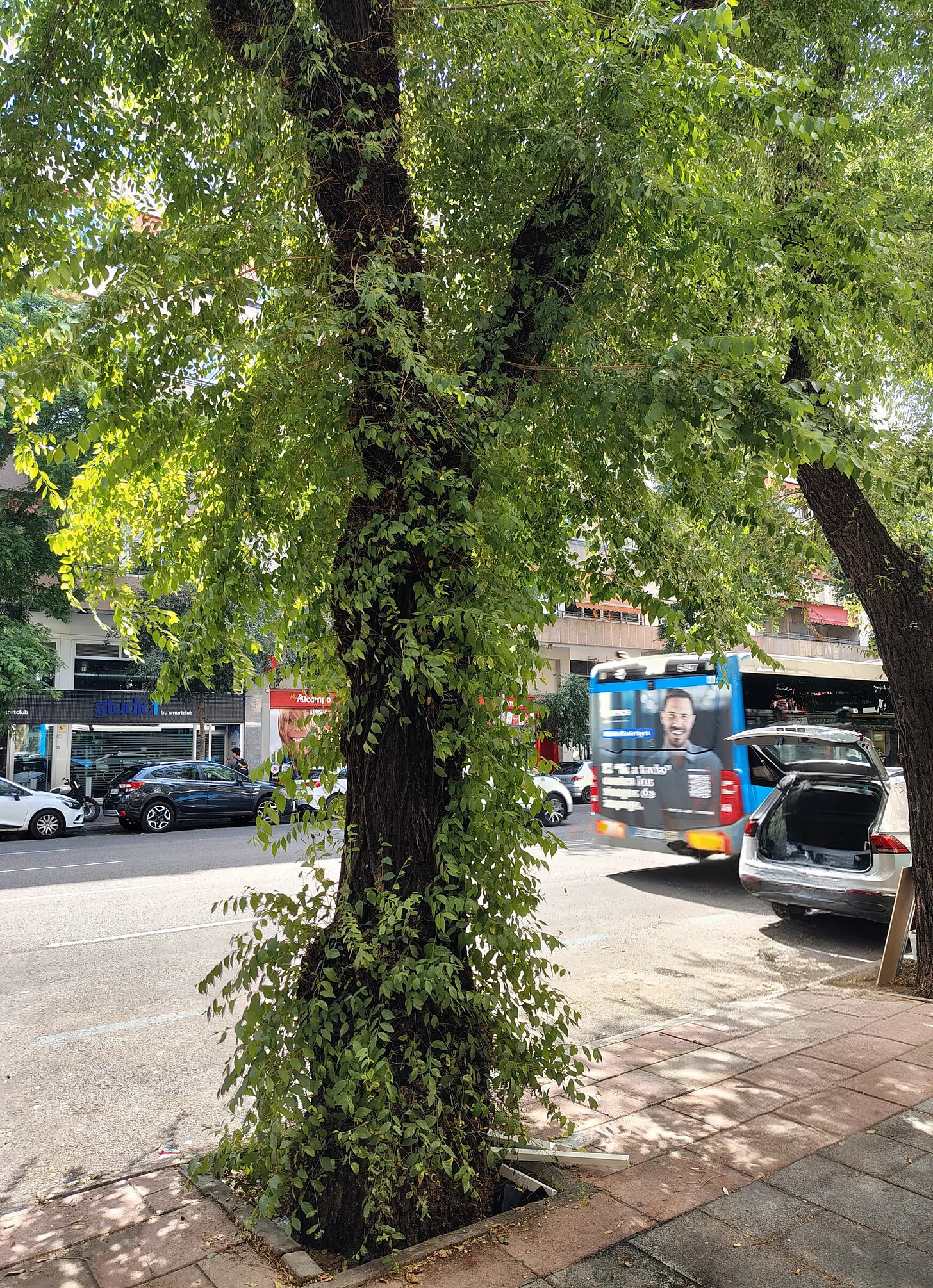
Epicormic shoots, dormant buds beneath the tree bark and even roots, activate under stress and represent an adaptation warranting attention in the atmospheric aerosol modification context. These shoots emerge due to physical damage, environmental stress including drought and extreme weather, disease, pest infestation, fires and changes in light availability and spectrum.
Trees produce epicormic shoots when light conditions change in ways altering the tree's energy budget or signalling potential competitive advantage. Increased light intensity following canopy opening triggers epicormic growth. However, changes in light spectrum or quality, even without intensity changes, can trigger stress responses.
Atmospheric Modification and Plant Stress
Stratospheric aerosol programs modify incoming solar radiation through reflection and scattering, creating dimming effects while altering spectral distribution. Trees facing reduced light quality may produce epicormic shoots as a survival strategy, attempting to maximise photosynthetic surface area when upper canopy efficiency declines. This occurs particularly in species readily producing epicormic growth: oaks, ashes, willows, eucalyptus, hardwoods.
Arborists have noted increasing epicormic growth in recent decades, typically attributed to drought, storm damage, or disease. However, if atmospheric aerosol programs intensified since the 1990s as patent timelines suggest, epicormic growth increases could correlate with intensified aerosol operations rather than conventional stress factors.
Critical research question: have epicormic shoot occurrences increased in patterns correlating with atmospheric aerosol deployment? Trees under major flight corridors might show elevated epicormic growth compared to regions with minimal aviation traffic. Unlike atmospheric measurements capturing instantaneous concentrations, tree growth patterns record cumulative environmental conditions over growing seasons. Tree ring analyses combined with epicormic shoot chronologies could reveal correlations between atmospheric intervention and plant stress responses when combined with flight traffic records.
Additional biological indicators might include changes in plant disease susceptibility, flowering patterns, or community composition favouring species tolerant of modified light conditions. Investigation could provide evidence that purely atmospheric measurements might miss, particularly for programs intensifying gradually over decades.

Chapter Seven: The Three Dimensional Electromagnetic Grid
The Architecture of Total Atmospheric Dominance
The complete atmospheric modification infrastructure operates as a three-dimensional electromagnetic grid integrating space-based satellite constellations, terrestrial 5G networks, and ground-based radar systems into a unified global atmospheric control mechanism managed by dedicated AI systems. This represents the ultimate realisation of the 1996 USAF vision for owning the weather, executed with technological sophistication that encompasses total atmospheric sovereignty over planetary environmental systems.
The Three-Layer Control System
Over 100,000 orbital platforms projected by 2030 provide the command layer, with Starlink's 8,000 or more operational satellites expanding toward 42,000 representing only the visible component of comprehensive orbital infrastructure including OneWeb, Amazon Kuiper, GPS, GLONASS, and classified military networks. These platforms utilise advanced phased array antennas capable of coordinated beam-forming operations focusing electromagnetic energy on specific atmospheric volumes with metre-level precision.
Terrestrial 5G networks serve as local targeting systems, deploying millions of transmission nodes operating at 24 to 100 gigahertz millimetre wave frequencies. Network slicing creates dedicated channels for atmospheric operations while maintaining civilian telecommunications cover, enabling real-time atmospheric heating synchronised with satellite operations above and radar systems below.
Ground-based NEXRAD and OPERA radar installations provide foundational electromagnetic field generation through dual-polarisation systems creating standing wave formations necessary for persistent aerosol suspension and atmospheric heating. Over-the-horizon capabilities through ionospheric reflection provide extended range effects interfacing seamlessly with satellite and 5G coordination.
Coordinated Real-Time Operations
AI coordination systems analyse atmospheric conditions across satellite monitoring, weather station networks, and real-time electromagnetic measurements to determine optimal targeting patterns. These systems initiate atmospheric modification operations within seconds, with coordinated electromagnetic field generation beginning simultaneously across all three platforms, creating focused heating zones and electromagnetic gradients controlling atmospheric chemistry and pressure systems across continental scales.
Total Infrastructure Scale
This represents the largest coordinated technological deployment in human history, with electromagnetic generation capabilities exceeding all previous military and civilian systems combined. The global scope eliminates atmospheric refuges where natural weather patterns might persist, while real-time coordination enables instantaneous responses overriding natural atmospheric processes, creating permanent dependency upon technological atmospheric management systems for basic environmental habitability.
Conclusion: The Ultimate Realisation of Atmospheric Warfare
The three-dimensional electromagnetic grid represents the ultimate realisation of the 1996 USAF vision for atmospheric control, transforming weather warfare from military capability into comprehensive environmental sovereignty over planetary systems. Integration of satellite constellation coordination, terrestrial 5G targeting, and ground radar field generation creates atmospheric modification capabilities transcending weather control to encompass total management over environmental conditions necessary for human survival.
The evidence demonstrates atmospheric warfare has evolved beyond military weather modification to comprehensive atmospheric management that eliminates natural atmospheric sovereignty through technological replacement of natural weather processes with artificially coordinated electromagnetic control systems. This infrastructure achieves the ultimate objective of institutional environmental sovereignty through systematic elimination of natural atmospheric independence, creating permanent human dependency upon technological atmospheric management for basic environmental habitability.
Chapter Eight: Coordinated Assault, Problem-Reaction-Solution Engineering
The integration of atmospheric modification operations with urban tree policy reveals a coordinated assault on natural cooling and photosynthetic systems. This represents textbook problem-reaction-solution engineering: remove natural cooling infrastructure through tree removal, deploy atmospheric aerosols altering spectral quality of sunlight reaching remaining vegetation, blame resulting environmental degradation on atmospheric CO2, then justify further interventions including solar radiation management programs to address the crisis created by initial interventions.
The technical sophistication utilising OPERA and NEXRAD coordination for navigation and targeting, AI traffic management for precision timing and patterns, multi-platform deployment for operational redundancy, and twenty four hour operations spanning the entire spectrum of aviation assets demonstrates atmospheric engineering with zero plausible explanation based on natural atmospheric phenomena or conventional commercial aviation.
The compounding effects of spectrally modified sunlight and removal of urban tree canopies creates unprecedented stress on photosynthetic systems. Plants evolved over millions of years to optimise photosynthetic efficiency under natural solar radiation spectra. The artificial modification of spectral characteristics, combined with deliberate removal of mature tree systems providing both direct cooling through evapotranspiration and atmospheric buffering through complex canopy interactions, represents an assault on fundamental biological processes sustaining terrestrial life.
Universities documenting urban heat island effects, reduced photosynthetic efficiency, and increased heat-related mortality measure the consequences of coordinated interventions while remaining blind to their coordinated nature. The same institutions funded to document declining urban tree health under climate change ignore removal of urban forests and optical evidence of atmospheric engineering visible to any observer capable of blocking solar glare.
Conclusion: The Engineering of Environmental Crisis
The documentation reveals atmospheric modification operations utilising integrated aviation infrastructure, coordinated through AI-enhanced traffic management systems, and synchronised with urban policies removing natural cooling systems. This coordinated assault on photosynthetic systems creates environmental degradation subsequently attributed to atmospheric CO2, justifying further interventions in a self-reinforcing cycle of engineered crisis and institutional response.
The optical signatures are visible to direct observation. The operational patterns violate all principles of commercial aviation efficiency. The timing coordination requires algorithmic precision impossible under manual air traffic control. The multi-platform deployment spans military, civilian, cargo, and agricultural aviation assets. The urban tree removal follows identical patterns across multiple cities and countries.
Atmospheric engineering disguised as meteorological observation, creating environmental conditions justifying its own expansion while destroying natural systems capable of atmospheric regulation and thermal balance.
Afterword: Their 100,000 Satellite Delusion
The deployment by 2030 of 100,000 satellites in low Earth orbit represents catastrophic misapplication of advanced technology ignoring fundamental orbital physics in favour of short-term commercial interests. Even with sophisticated AI orbital management systems, the sheer density of objects creates insurmountable collision probability where every satellite becomes both target and projectile in an increasingly chaotic debris environment. At orbital velocities of 28,000 kilometres per hour, even perfectly coordinated AI systems cannot eliminate the statistical inevitability of cascading collisions transforming low Earth orbit into a permanent debris field within decades.
This approach sacrifices the orbital commons, humanity's shared gateway to space, for temporary communication profits, effectively condemning future generations to operate in a debris-choked environment making space access exponentially more dangerous and expensive. The tragedy lies not in technological limitation but in the poverty of vision choosing to crowd a finite orbital zone rather than develop sustainable alternatives that same engineering capability could easily achieve, such as three massive geostationary platforms providing superior coverage without the orbital suicide mission that 100,000 low Earth orbit satellites represent.
Next: Part Two of Three
Part One has documented the historical development and technical infrastructure enabling systematic atmospheric modification operations. The complete operational picture requires examination of delivery mechanisms and institutional frameworks that reveal the full scope of weather warfare disguised as climate science.
Part Two examines commercial aviation as the primary atmospheric modification delivery system, documenting fuel supply chain infiltration, international coordination mechanisms, and observation networks that enable systematic aerosol dispersion through civilian aviation infrastructure while maintaining perfect operational camouflage. This includes analysis of how atmospheric modification directly connects to citizens' monthly energy bills through weather-dependent renewable energy systems and speculative energy markets that profit from artificial atmospheric volatility.
Part Three analyses the legal frameworks, classified architectures, executive orders, and institutional coordination mechanisms that integrate weather modification with population control agendas and economic warfare strategies, concluding with comprehensive analysis of the complete climate engineering operation that has replaced natural weather systems with technological atmospheric management.
Teresa Ribera's role as Executive Vice-President of the European Commission for Clean, Just and Competitive Transition positions her as the key institutional figure coordinating atmospheric modification infrastructure across European Union territories while maintaining climate emergency cover for systematic weather warfare operations. Her unprecedented authority over both environmental policy and competition control enables replication of Spanish energy sector destruction across all EU member states.
The evidence is overwhelming and technically irrefutable: systematic atmospheric engineering creating environmental conditions that justify expanded institutional control while destroying natural systems capable of atmospheric regulation. The complete documentation across all three parts reveals weather modification has evolved beyond military application to become the primary mechanism for economic, political, and biological control over human civilisation.